Golden Retriever Grooming Guide
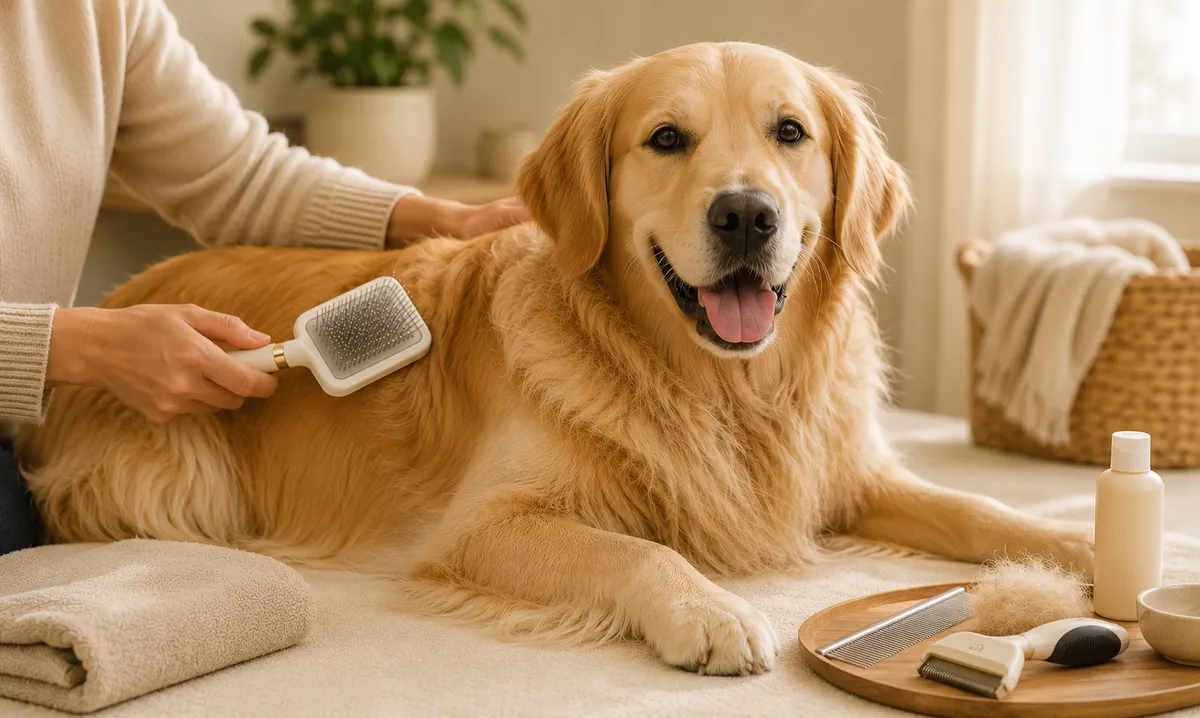
Few dogs wear their coat as proudly as a Golden Retriever — and few coats ask for as much steady, informed care. That thick golden double coat is beautiful, functional, and a reliable source of fur on every surface of your home. Manage it well and it stays healthy, comfortable, and far less of a shedding problem than its reputation suggests.
The key is understanding what you're working with. A Golden's coat isn't like a short-haired dog's, and grooming it on the wrong schedule — or with the wrong assumptions — creates more work, not less. This guide covers the coat itself, a realistic brushing routine, the mat-prone feathering, bathing, and the grooming-time signs that are worth a veterinarian's attention.
Understand the double coat first
A Golden Retriever has a double coat: a longer, water-resistant outer coat over a soft, dense undercoat. The two layers work together to insulate the dog against cold and heat and to protect the skin. This is a working dog's coat, built for a dog bred to retrieve from cold water.
That structure explains everything about grooming a Golden. The dense undercoat is what sheds so abundantly, especially when it's released in bulk during seasonal changes. The longer outer coat forms the characteristic feathering — the longer fur on the legs, tail, ears, and chest — which looks lovely and mats more readily than the rest.
Once you picture those two layers, the routine makes sense: you're regularly clearing released undercoat before it sheds everywhere, and keeping the feathering worked through before it tangles.
A realistic brushing routine
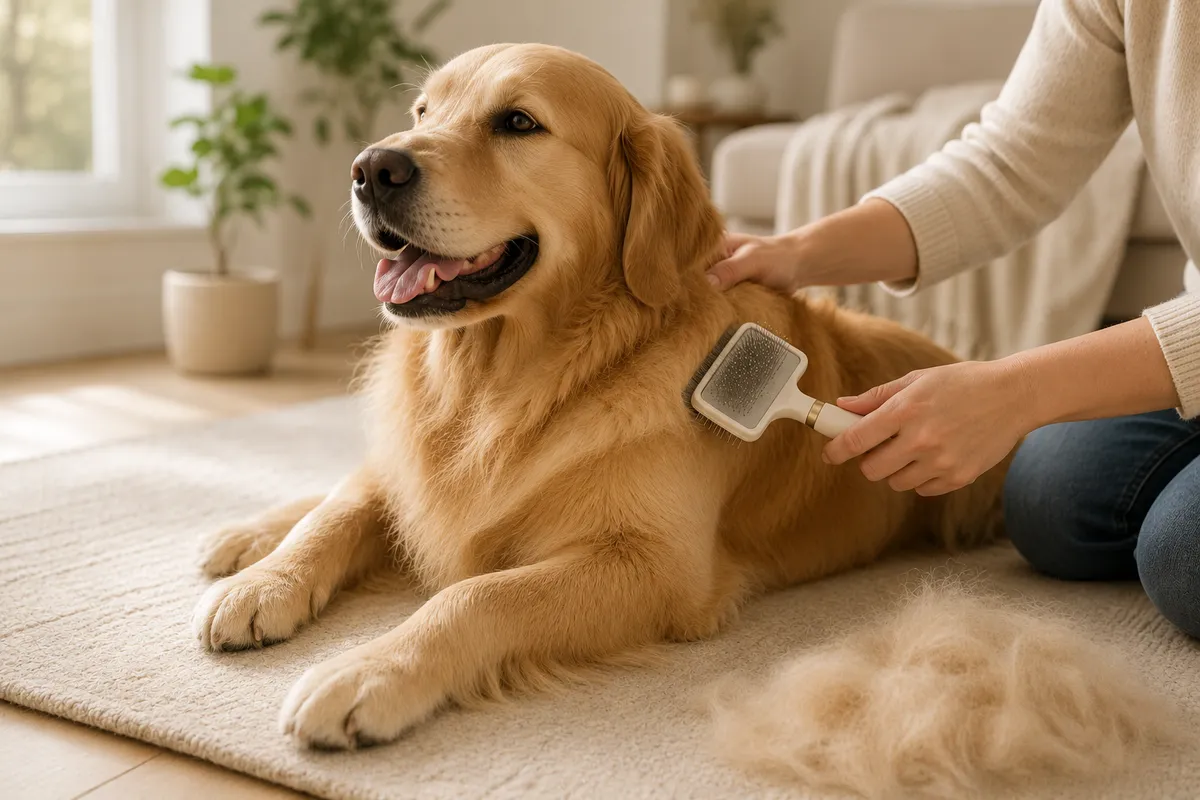
Brushing is the heart of Golden grooming, and consistency beats intensity every time. As a baseline, brush several times a week. This keeps loose undercoat moving out into the brush rather than onto your floors and keeps the feathering from knotting.
Then there are the two big moments each year. In spring and autumn, Goldens "blow" their coat — shedding the undercoat heavily over a few weeks. During these stretches, daily brushing makes a dramatic difference, both to your home and to your dog's comfort as the dense old undercoat clears.
Work gently and follow the coat's direction. Give extra, patient attention to the feathering and friction zones rather than just the easy flat body coat. For the underlying technique — how to brush calmly and thoroughly without irritating the skin — our guide on how to brush a dog covers the full method, and how often to brush by coat type puts the Golden's schedule in context.
The feathering: where mats actually form
The flatter body coat of a Golden rarely mats. The feathering is another story. The longer fur behind the ears, on the backs of the legs, around the tail, on the chest, and in the "armpits" experiences friction and tangles if it isn't worked through regularly.
Make these areas a deliberate part of every session rather than an afterthought. Worked through a few times a week, the feathering stays smooth. Neglected, it tightens into mats that pull on the skin — and those need careful handling. Crucially, never cut a mat out with scissors; the skin lifts into the base of the mat and is easily cut. Our guide on how to safely detangle matted fur walks through removing tangles without hurting your dog.
Never shave the coat to fight shedding
It's tempting, in a heavy shedding season or a hot summer, to think a short clip would solve everything. For a double-coated breed, don't.
The double coat insulates against heat as well as cold and shields the skin from sun and injury. Shaving it doesn't keep a Golden cooler — and it can interfere with how the coat regrows, sometimes leaving it patchy or permanently altered in texture. The right way to help a Golden through warm weather is shade, fresh water, and regular brushing to remove the dead insulating undercoat. Let the coat do its job; just keep it clear and clean.
Bathing, briefly
Goldens don't need frequent baths — every couple of months, or when they're genuinely dirty, is usually plenty. Over-bathing strips natural oils and can dry the skin.
Two rules make bath time go well. Brush out all tangles and loose fur first — water tightens mats and makes them far harder to remove afterward. And dry the dense coat thoroughly, right down to the undercoat, since trapped damp against the skin can lead to irritation in such a thick coat.
Tools for a Golden's coat
A gentle brush that moves through the coat without dragging on the skin handles the bulk of routine grooming and the all-important feathering. A tool with rounded pin tips is kinder on the skin and makes the frequent sessions a Golden needs more comfortable for both of you — the approach the PASLUNA™ brush is designed around.
Some owners add a deshedding tool for the heavy seasonal sheds, used sparingly and gently to clear undercoat. It's a supplement, not an everyday tool — overusing one risks irritating the skin. If you're weighing the options, our comparison of slicker brushes and deshedding tools explains where each fits.
Common mistakes
- Only brushing the body coat. The feathering is where mats form — it needs the most attention, not the least.
- Shaving to reduce shedding or heat. It doesn't work as hoped and can harm the coat.
- Bathing a tangled coat. Always detangle first.
- Brushing only when shedding looks bad. A steady rhythm prevents the buildup; reactive brushing is just cleanup.
- Skipping the seasonal ramp-up. The twice-yearly coat blow genuinely needs daily attention while it lasts.
When to pause and contact your veterinarian
Grooming a Golden several times a week gives you a regular, close look at the skin and coat — which makes you well placed to catch problems early. Goldens are prone to certain skin and ear conditions, so treat grooming as a routine health check and contact your veterinarian if you notice:
- Hot spots — red, moist, irritated patches of skin that can appear and worsen quickly.
- Red, flaky, scabbed, or smelly skin, or areas your dog licks or scratches persistently.
- Bald patches or broken hairs, as opposed to the normal even, heavy shed.
- Ear problems — redness, odour, discharge, or head-shaking, which Goldens are prone to.
- Lumps, bumps, or sore spots found while brushing.
- A sudden change in coat condition or shedding pattern alongside changes in appetite, energy, or behaviour.
None of these are things a brush can fix, and a Golden's thick coat can hide developing skin issues until they're well established — so when something looks off under the fur, an early vet visit is always worthwhile.
A coat worth the effort
A Golden Retriever's coat rewards consistency more than almost any other breed's. Brush several times a week, step up to daily during the seasonal blows, give the feathering the attention it needs, leave the clippers alone, and use grooming time to keep an eye on the skin underneath.
Do that, and the famous Golden shedding becomes a manageable background hum rather than a daily battle — and the grooming itself becomes a calm, connected few minutes with one of the most companionable dogs there is. If your Golden finds brushing stressful rather than soothing, our guide on how grooming reduces pet anxiety looks at turning the routine into something you both enjoy.
Key Takeaways
- The Golden Retriever has a water-resistant double coat that sheds year-round and 'blows' heavily twice a year. Regular brushing is what keeps it manageable.
- Brush several times a week as a baseline, and daily during the heavy seasonal sheds, paying special attention to the feathering where mats form.
- Never shave a Golden's double coat to reduce shedding — the coat insulates and protects, and shaving can interfere with how it regrows.
- Goldens are prone to skin and ear issues, so grooming doubles as a regular health check. Redness, hot spots, or persistent ear trouble are reasons to see your veterinarian.
Frequently asked

The PASLUNA Editorial Team creates expert-backed educational content focused on pet grooming, coat care, shedding management, and pet wellness for dogs and cats.
 Dog Grooming
How to Brush a Dog the Right Way (Step-by-Step)
A calm, step-by-step ritual for brushing any coat type — how to do it well, how often, and what a healthy coat looks like.
 Shedding
Why Does My Dog Shed So Much?
Why dogs shed, what counts as normal versus excessive, and how to tell ordinary seasonal shedding from a sign worth a vet visit.
 Dog Grooming
How to Safely Detangle Matted Fur
A careful, step-by-step way to work out tangles and mats without hurting your pet — plus the clear signs a mat needs a professional, not scissors.