How to Safely Detangle Matted Fur

A mat is more than a cosmetic problem. What starts as a small tangle behind the ear can tighten into a dense knot that pulls on the skin with every movement, traps moisture against it, and hides whatever is happening underneath. Left long enough, matting becomes genuinely uncomfortable — sometimes painful.
The good news is that most tangles, caught early, come out at home with patience and a gentle hand. The crucial part is knowing how to do it safely, and — just as important — recognising the mats you shouldn't attempt yourself. This guide walks through the careful method, the tools that help, the one mistake that causes most grooming injuries, and the point at which the job belongs to a professional.
First, the rule that prevents most injuries: never cut a mat
Before any technique, this is the thing to take away from the entire article: do not cut a mat out with scissors.
It seems like the obvious shortcut, and it's the most common way well-meaning owners injure their pets. When fur mats, the skin underneath gets drawn up into the base of the knot — the mat and the skin are pulled together. From above you can't see where the mat ends and the skin begins. A snip that looks safe can open the skin, and these cuts are often deep and need veterinary care.
If a mat is too tight to work out by hand, that's the signal to stop and get help — not to reach for scissors. Professional groomers remove stubborn mats with clippers held flat against the skin, a technique that's safe in trained hands and isn't something to improvise at home.
Set up calm before you start
Detangling takes patience, and a stressed pet makes it harder and riskier. Choose a quiet moment when your pet is relaxed rather than wound up. Work in good light so you can see what you're doing and where the skin is.
Have everything to hand before you begin: your fingers (your most sensitive tool), a suitable brush, and optionally a light dusting of cornstarch or a pet-safe detangling spray to reduce friction at the edges of a tangle. Keep sessions short. If your pet has a low tolerance for handling — many do — break the work across several short sittings rather than forcing one long one. For a pet who resists grooming altogether, the gentle, trust-building approach in our guide on how to brush a cat translates well to dogs too.
The step-by-step method
Worked carefully, most mats and tangles come apart in layers. The principle throughout is simple: never pull on the skin.
Step 1 — Assess the mat
Feel where the mat sits and how tight it is against the skin. A loose tangle you can lift away from the body is workable at home. A dense knot pressed flat to the skin, or one in a sensitive spot, may not be — set your expectations before you start, not halfway through.
Step 2 — Protect the skin
Hold the fur between the mat and the skin with your free hand — gather the base of the fur in your fingers close to the body. This way, any tension goes into your grip rather than pulling at your pet's skin. This single habit is what makes detangling comfortable instead of painful.
Step 3 — Work from the outside in
Start at the outer edge of the mat, never the centre. Tease the loose hairs at the edge apart with your fingers first. As the edge loosens, switch to short, gentle brush strokes, always working the outer layer and gradually moving inward. Think of it as peeling the mat apart in thin layers rather than forcing through the middle.
Step 4 — Take your time and take breaks
Work in small sections. If a section won't give after gentle effort, don't escalate the force — that's how you hurt your pet and teach them to dread grooming. Pause, let everyone settle, and come back to it. A mat that resists repeated gentle attempts is telling you it may need a professional.
The tools that help — and the one that doesn't
The right brush makes detangling far easier and more comfortable. A tool that drags or catches on the skin turns a manageable tangle into a fight. Look for a brush that moves through the coat smoothly with rounded pin tips, so it works the fur without scraping the skin beneath. The PASLUNA™ brush is designed for this kind of gentle, everyday detangling and maintenance. If you're not sure what suits your pet's coat, our guide on how to choose a grooming brush breaks it down by coat type.
The tool that doesn't belong anywhere near a mat, to say it once more, is scissors.
Prevention is the only real cure
Here's the truth that makes all of the above mostly unnecessary: a coat that's brushed regularly rarely mats. Detangling is damage control; consistent brushing is the actual solution.
Mats form in predictable places — the friction zones where fur rubs and isn't worked through: behind the ears, in the "armpits" under the front legs, around the collar, on the belly, and on the backs of the legs. Long, fine, and curly coats mat fastest and need the most frequent attention. If you brush those areas consistently, tangles never get the chance to tighten into mats.
How often depends entirely on the coat. Our guide on how often you should brush your dog covers the right rhythm by coat type — and following it is the most reliable way to never read a detangling guide again.
Common mistakes
The errors that turn detangling painful are easy to avoid once you know them:
- Cutting with scissors. The one rule worth repeating. It causes the most serious injuries.
- Pulling from the skin side. Tugging at the root hurts; always hold the fur close to the skin and work the outer end.
- Forcing through the centre of a mat. Work edges inward in layers instead.
- Bathing a matted coat first. Water tightens mats and makes them far harder to remove. Detangle before any bath.
- Pushing past your pet's tolerance. A grooming session that ends in pain makes the next one harder. Short and calm wins.
When to pause and contact a professional
Some mats genuinely cannot be removed safely at home, and recognising that is good judgement, not failure. Stop and see a professional groomer or your veterinarian if:
- The mat is tight against the skin and you can't lift it away from the body.
- The mats are large, numerous, or close to sensitive areas — the face, ears, genitals, or paw pads.
- Your pet shows pain — flinching, crying out, snapping, or trying hard to get away when you touch the area.
- You see skin problems when you part the fur: redness, sores, a bad smell, moisture, or signs of parasites trapped beneath the mat.
- Your pet won't tolerate the work, making safe removal impossible without professional handling.
A vet's attention is especially warranted if the skin under a mat looks irritated or infected, or if severe matting seems to be limiting how your pet moves. Trained groomers and veterinarians can remove difficult mats safely and check the skin underneath — often resolving discomfort your pet has been quietly carrying.
Gentle and patient, every time
Detangling matted fur safely comes down to a few unshakeable habits: never use scissors, always protect the skin, work from the outside in, and stop when a mat is beyond what's safe to do at home. None of it is complicated, but all of it depends on patience over force.
And the longer-term lesson is the most useful one: the owners who never struggle with mats are simply the ones who brush regularly. Build that habit for your pet's coat type and the tangles never get their foothold — the grooming stays a calm few minutes rather than a rescue operation. If shedding is part of what's filling your home with loose fur, our guide on why dogs shed covers managing that at the source.
Key Takeaways
- Never cut a mat out with scissors. The skin pulls up into the mat, and it's dangerously easy to cut your pet — this is the most common way home grooming causes injury.
- Work from the outer edge of a mat inward, in small sections, holding the fur close to the skin so you're not tugging on it.
- Regular brushing is the only real cure for mats, because it prevents them. A coat brushed consistently rarely mats in the first place.
- If a mat is tight to the skin, large, or your pet is in pain, stop and see a professional groomer or your veterinarian — some mats can't be removed safely at home.
Frequently asked

The PASLUNA Editorial Team creates expert-backed educational content focused on pet grooming, coat care, shedding management, and pet wellness for dogs and cats.
 Dog Grooming
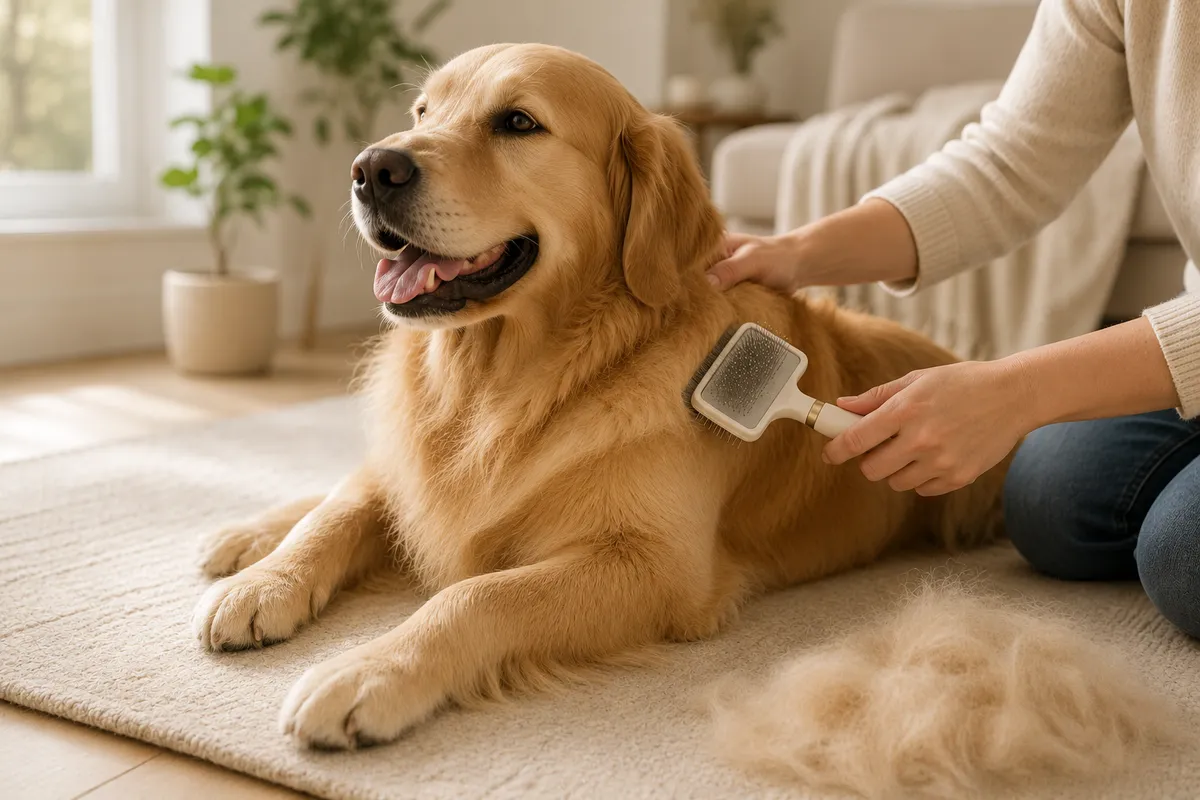
How to Brush a Dog the Right Way (Step-by-Step)
A calm, step-by-step ritual for brushing any coat type — how to do it well, how often, and what a healthy coat looks like.
 Dog Grooming
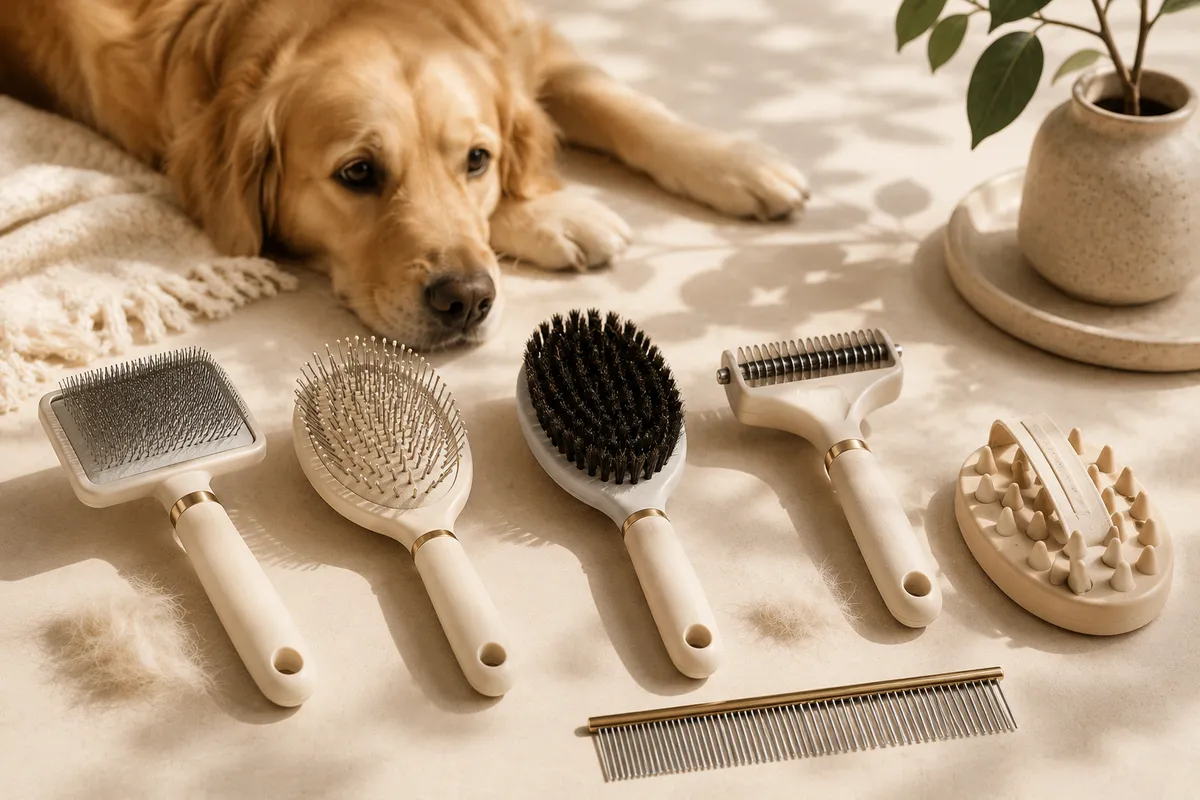
How to Choose the Right Grooming Brush
A plain guide to grooming brushes — what each type does, which suits your pet's coat, and how to match the tool to the job.
 Cat Grooming
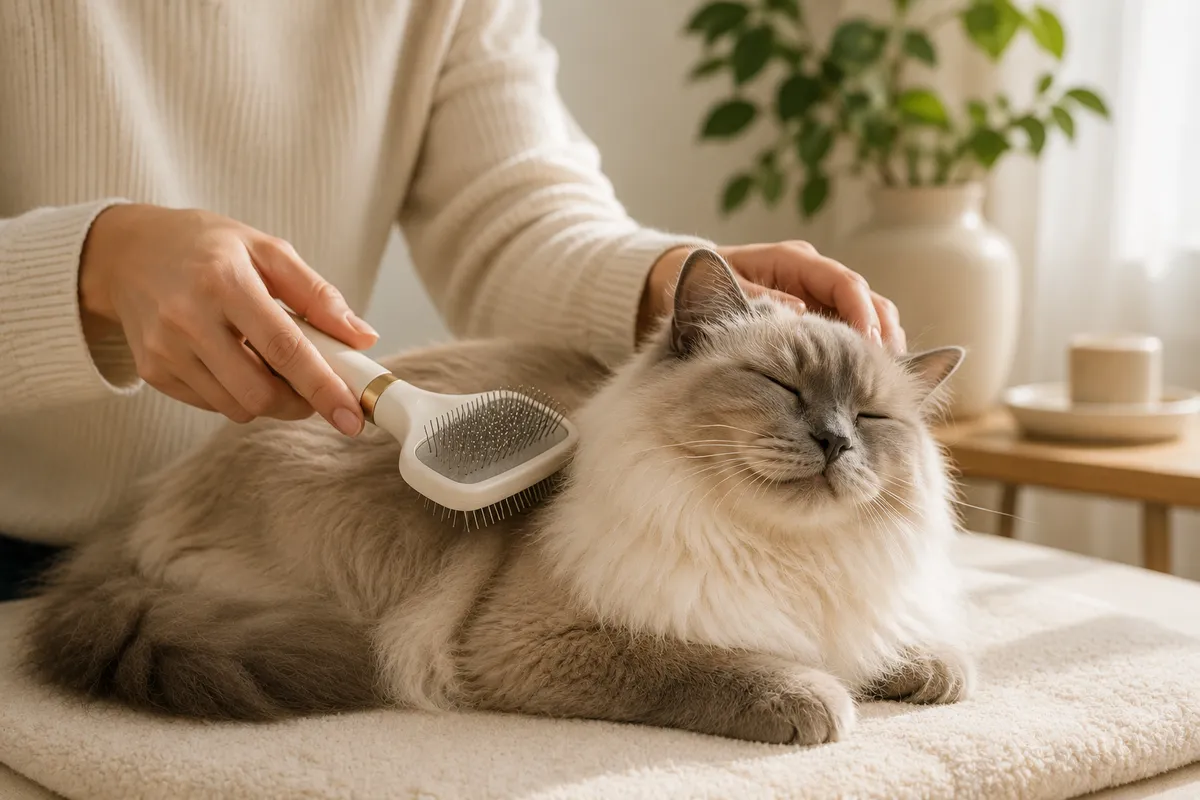
How to Brush a Cat Without Stress
How to brush a cat calmly — reading her signals, choosing the right moment, and short gentle sessions that work even for cats who hate it.