How to Choose the Right Grooming Brush
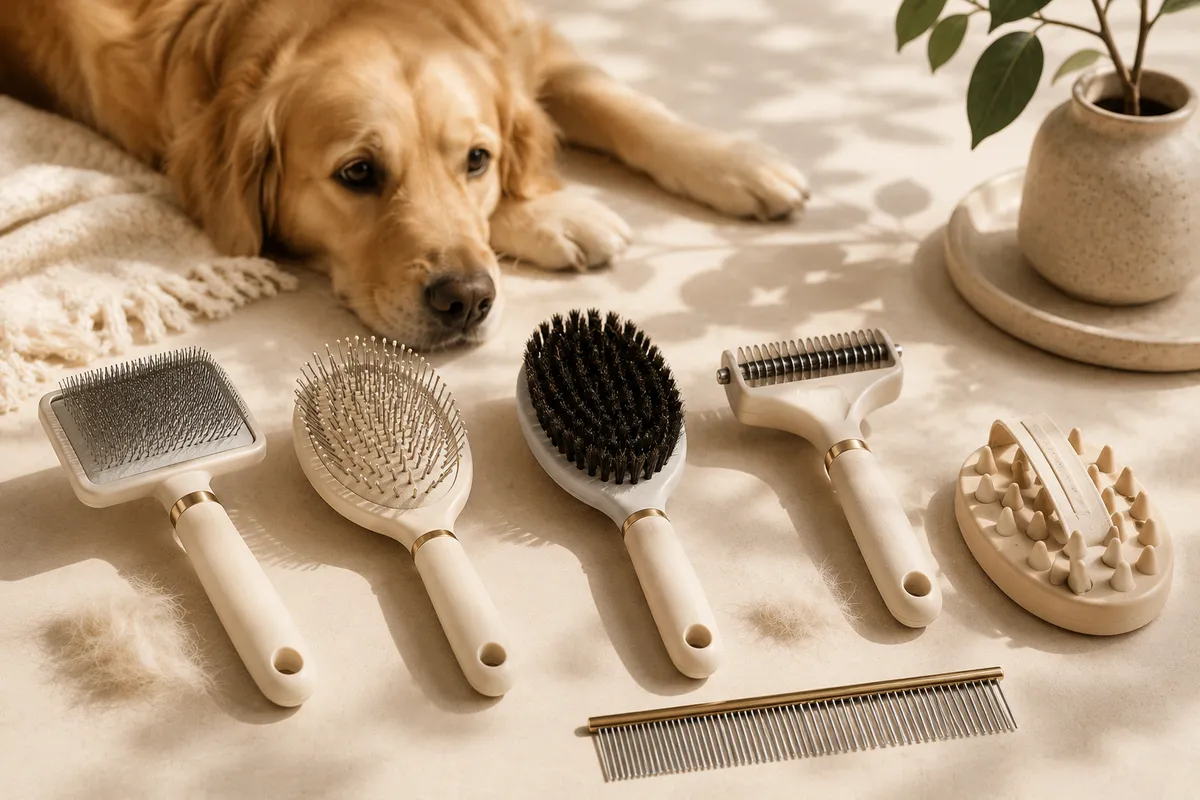
Walk down the grooming aisle, or scroll one online, and the number of brushes is faintly absurd — slickers, pins, bristles, rakes, mitts, deshedding blades, dual-sided everything. The good news is that choosing well is simpler than the selection suggests, because the right brush is decided almost entirely by one thing: your pet's coat. Get that match right and grooming is quick and calm. Get it wrong and even a careful session drags, pulls, and leaves loose hair behind.
This guide explains what each type of brush actually does, which coat each one suits, and how to tell a tool that fits from one that fights you.
The short answer
To choose the right grooming brush, match it to your pet's coat type rather than the breed name. Short coats do well with a bristle brush or rubber curry mitt; medium, long, and curly coats with a slicker brush and a comb; and dense double coats usually need an undercoat rake or deshedding tool as well. Look for rounded tips that glide without scraping the skin and a comfortable handle. The right tool works in fewer passes and keeps the session calm.
Why the right brush matters more than you'd think
A brush is not just a brush. The wrong tool doesn't only do a worse job — it actively makes grooming harder for both of you. A brush that's too harsh for the coat scrapes the skin, which teaches a pet to dread the sight of it. One that's too gentle for a dense coat skates over the surface and never reaches the loose undercoat, so you brush and brush and still find fur everywhere.
The right brush does the opposite. It glides, removes loose hair efficiently, works through tangles in fewer passes, and feels good enough that many pets settle into the session. That efficiency matters: fewer passes mean a shorter, calmer session, which is the whole foundation of a sustainable brushing routine. The tool, in other words, is upstream of everything — comfort, results, and whether your pet cooperates next time.
The main types of grooming brush
Here's what each common tool actually does, in plain terms.
Slicker brush
Fine, short wires set close together on a flat or slightly curved pad. The most versatile everyday brush, a slicker removes loose hair, works out tangles, and smooths the coat. It suits medium, long, and curly coats especially well. Look for one with rounded wire tips — the rounding is what lets it move through the coat without scraping the skin underneath.
Pin brush
Longer, more widely spaced pins, usually with rounded or coated tips, on a flexible pad. Gentler than a slicker and better suited to longer coats and to general finishing. It glides nicely but removes less loose undercoat than a slicker, so on a heavy shedder it's often a finishing tool rather than the main one.
Bristle brush
Tightly packed natural or synthetic bristles. Best for short, smooth coats, where it lifts loose surface hair and distributes the skin's oils to bring out shine. It doesn't penetrate longer or denser coats, so it's a short-coat specialist.
Rubber curry brush or grooming mitt
A rubber tool with short nubs, often worn like a glove. Excellent for short coats, gentle enough that most pets enjoy it like a massage, and good at lifting loose hair. It doubles nicely as a bath-time tool. Many short-haired cats tolerate a rubber mitt better than any other brush — a useful starting point if you're trying to reduce cat shedding at home.
Undercoat rake
A row of longer, rounded teeth designed to reach through the topcoat and pull out loose undercoat. Made specifically for double coats, where the dense undercoat is what sheds heavily. It does a job no slicker or pin brush can, reaching the layer they skim over.
Deshedding tool
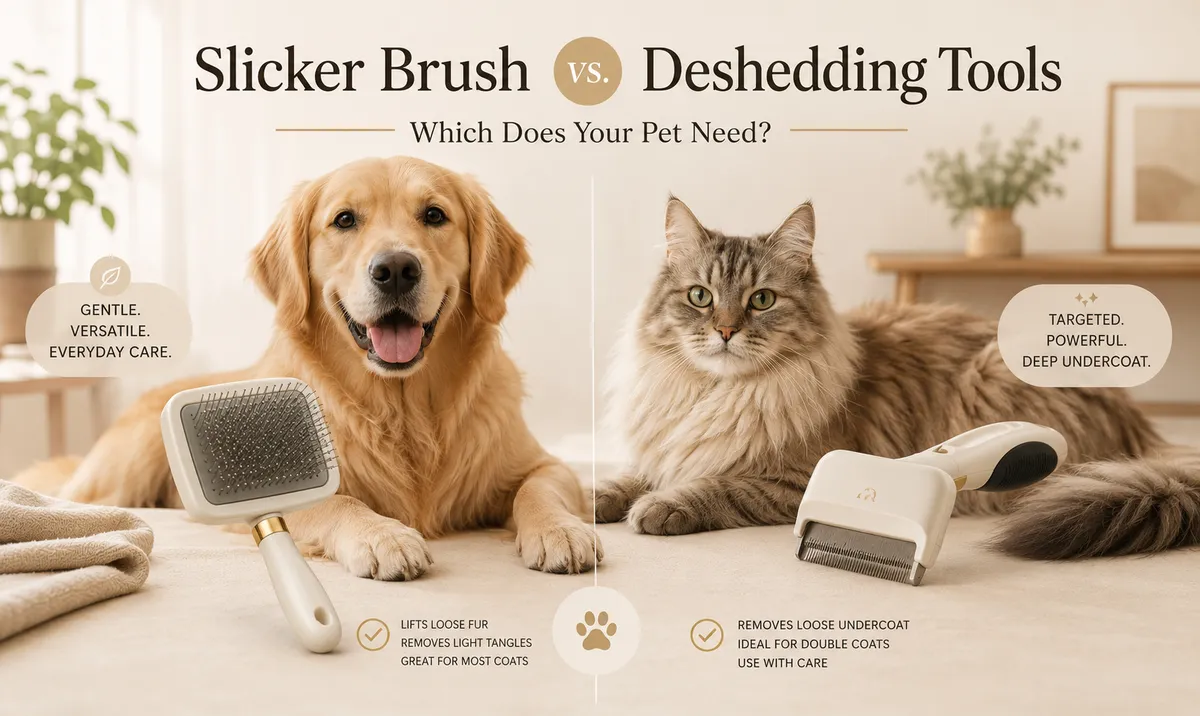
A fine-toothed blade-style tool built to remove large amounts of loose undercoat from double-coated, heavy-shedding dogs. Highly effective during seasonal shedding — but use it gently and sparingly, because over-use or too much pressure can irritate the skin. It's a periodic tool, not an everyday one. For a closer look at how these compare with everyday brushes, see slicker brushes vs. deshedding tools.
Comb
Not a brush, but essential alongside one. A comb confirms the work — run it through after brushing and it catches any hidden tangles a brush missed, especially in the friction zones behind the ears and under the legs.
Which brush for which coat
Coat type, not breed, is the deciding factor. Here's the match-up.
Short coats
Breeds like the Labrador Retriever, Beagle, and Boxer. A bristle brush or rubber curry mitt is all most short coats need — it lifts loose hair and brings out shine, used once a week or so. Note that some short-coated dogs, like Labradors, carry a dense double coat underneath and may also benefit from an occasional undercoat tool during heavy sheds.
Medium coats
Breeds like the Border Collie and Australian Shepherd. A slicker brush handles the body, and a comb checks the friction areas where medium coats tangle. This pairing covers most medium coats comfortably.
Long coats
Breeds like the Shih Tzu, Maltese, and Afghan Hound. A slicker brush and a comb, or a pin brush for finishing, used frequently. Long coats tangle fast, so the priority is a tool that works down to the skin in sections without pulling.
Curly and wavy coats
Breeds like the Poodle. A slicker brush plus a comb. Curly coats trap loose hair within the curls rather than shedding it, so they mat easily and need a tool that can work through the curl down to the skin.
Double coats
Breeds like the Golden Retriever, Siberian Husky, and German Shepherd. These need a combination: a slicker or pin brush for the topcoat, plus an undercoat rake or deshedding tool to lift the dense undercoat the topcoat hides — particularly during the heavy spring and fall sheds. Understanding why double-coated dogs shed so much makes it clear why the single extra tool matters.
Cats sit outside this table. Their skin is thinner and their coats tangle and shed on a different rhythm, so the same two tools get chosen for different reasons — which one a cat's coat actually needs comes down to whether you're managing knots or loose undercoat.
What to look for in a quality brush
Within any category, build quality varies. A few things separate a tool that lasts and feels good from one that doesn't:
- Rounded tips. Whether wire pins or longer teeth, rounded tips glide; sharp ones scrape. This is the single most important comfort feature, and the difference a pet feels most.
- A comfortable handle. You'll hold it for the length of a session, sometimes daily. A handle that gives control without a tight grip makes grooming easier and steadier.
- Appropriate firmness. Matched to the coat: firmer for dense double coats, gentler for short coats and sensitive skin. The same firmness isn't right for every pet.
- Solid construction. Pins that don't bend or fall out, a pad that flexes with the body, materials that survive regular cleaning.
A well-made everyday brush with rounded pin tips — the kind the PASLUNA™ brush was designed around — handles most medium, long, and curly coats, and is a sensible first tool if you're building a small grooming kit from scratch. Pair it with a comb and, for a double coat, an undercoat tool, and you've covered nearly every situation.
Common mistakes when choosing a brush
- Buying for the breed name instead of the coat. Two dogs of the same breed can have different coats; the coat in front of you is what matters.
- Using one brush for everything. A single slicker won't reach a double coat's undercoat, and a deshedding tool is wrong for a short smooth coat. Most pets need one main brush plus a comb.
- Choosing the firmest tool available. More aggressive isn't better — it's just harder on the skin. Match firmness to the coat, and err gentle.
- Skipping the comb. It's the cheap tool that catches what the brush missed and tells you the job's actually done.
Building a simple grooming kit
You don't need the whole aisle. For most pets, a small, well-chosen kit covers everything:
- One main brush matched to the coat — a slicker for medium, long, or curly coats; a bristle brush or rubber mitt for short coats.
- A comb — the inexpensive tool that checks your work and catches hidden tangles in the friction zones.
- An undercoat tool, only if you have a double coat — an undercoat rake or deshedding tool for the seasonal sheds.
That's it. Three items at most, two for many pets. Buying beyond that tends to mean owning several tools that do the same job, while still missing the one your coat actually needs. Start with the main brush and the comb, add the undercoat tool only if a double coat calls for it, and you'll have covered nearly every grooming situation you'll meet.
How to care for your brush, and when to replace it
A brush works better and lasts longer with a little upkeep, and a worn tool quietly undoes good technique.
- Clear it after each session. Pull the accumulated hair off the pad so the tips can actually reach the coat next time. A clogged slicker just skates over the surface.
- Wash it occasionally. A rinse removes the oils and dander that build up on the pins and bristles, especially on a tool used several times a week.
- Check the tips. On a slicker or pin brush, the protective rounding on the tips wears down over time, and worn tips begin to scrape. If the coating is gone or pins are bent, it's time to replace it.
- Replace a shedding tool's blade as needed. Deshedding tools dull with use; a dull blade pulls rather than glides.
A brush is a small investment, but a worn one stops being gentle. If your pet starts flinching from a tool that used to be fine, check the tips before assuming the problem is the pet.
When to pause and contact your veterinarian
Choosing a brush is low-stakes, but what you find while using it sometimes isn't. Set the brush aside and contact your veterinarian if you notice:
- Skin that looks red, flaky, scabbed, or sore under the coat, rather than calm skin a brush simply glides over
- A pet who reacts with pain to a tool that shouldn't hurt — flinching or guarding a spot may mean soreness underneath, not the wrong brush
- Mats already tight against the skin, which are safest removed by a groomer or veterinarian rather than worked at with any home tool
- Bald patches or a sudden change in shedding, which a brush won't fix and which can signal an underlying issue
The right brush keeps a healthy coat healthy; it isn't a treatment for a skin problem. When the skin itself looks wrong, that's a veterinary question, not a tooling one.
Choose by the coat, favor rounded tips and a comfortable handle, and keep the kit small — one main brush, a comb, and an undercoat tool only if you have a double coat. Get that right and the brush stops being a thing your pet tolerates and becomes the reason grooming is quick, calm, and even pleasant.
Key Takeaways
- Match the brush to the coat, not the breed name: short, medium, long, curly, and double coats each call for a different tool.
- Slicker brushes suit most medium, long, and curly coats; pin brushes suit longer coats; bristle and rubber tools suit short coats.
- Double coats often need an undercoat rake or deshedding tool to reach the dense undercoat the topcoat hides.
- Look for rounded pin tips and a comfortable handle — the tool should glide without scraping the skin.
- The right brush works in fewer passes and keeps the session calmer; the wrong one drags and makes grooming unpleasant.
Frequently asked

The PASLUNA Editorial Team creates expert-backed educational content focused on pet grooming, coat care, shedding management, and pet wellness for dogs and cats.
 Shedding
Slicker Brush vs. Deshedding Tools: Which Does Your Pet Need?
How slicker brushes and deshedding tools actually differ, what each does well, and how to choose the gentler option for your pet's coat.
 Dog Grooming
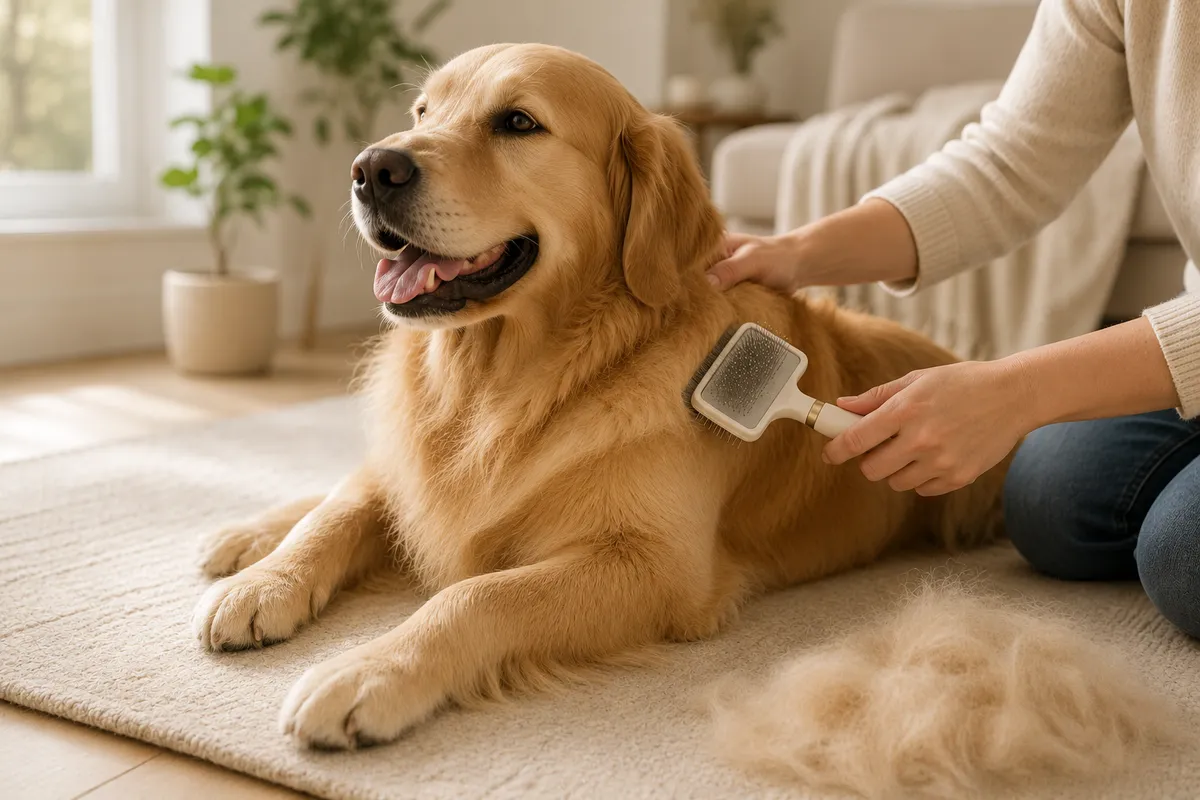
How to Brush a Dog the Right Way (Step-by-Step)
A calm, step-by-step ritual for brushing any coat type — how to do it well, how often, and what a healthy coat looks like.
 Shedding
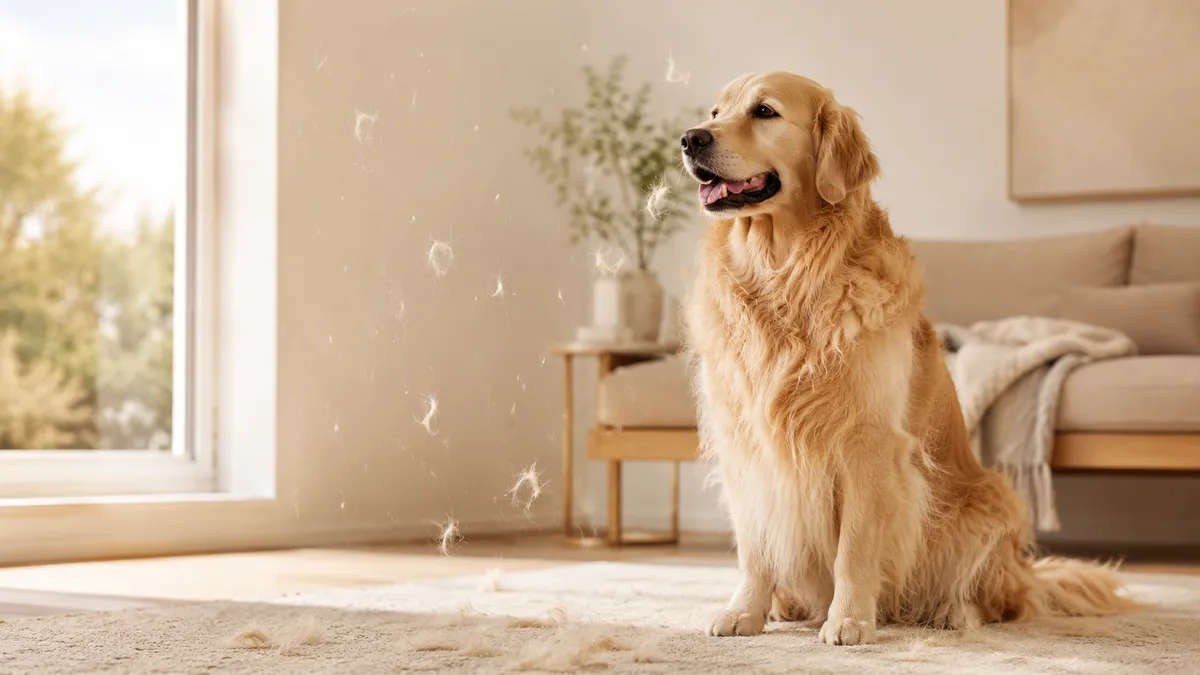
Why Does My Dog Shed So Much?
Why dogs shed, what counts as normal versus excessive, and how to tell ordinary seasonal shedding from a sign worth a vet visit.