Why Does My Dog Shed So Much?

If it feels like your dog is leaving a second dog's worth of fur on the sofa, you're not imagining it — and you're almost certainly not doing anything wrong. Shedding is one of the most common things dog owners worry about, and most of the time it's simply the coat doing exactly what it's built to do. But "most of the time" isn't "always," and the useful skill is telling ordinary heavy shedding apart from the kind that's trying to tell you something.
This guide explains why dogs shed, what separates normal from excessive, why spring and fall turn into fur storms, and the signs that mean it's worth a conversation with your veterinarian rather than another pass with the brush.
The short answer
Dogs shed because shedding is how they lose old or damaged hair to make room for new growth — it's a normal, healthy process. How much a dog sheds depends mostly on breed and coat type, with double-coated breeds shedding the most, especially during spring and fall. Heavy shedding is usually normal. It's worth a veterinary visit only when it changes suddenly or comes with bald patches, irritated skin, or other symptoms.
Why dogs shed
Every dog with hair sheds, because hair grows in a cycle. Each strand goes through a phase of active growth, a transitional phase, a resting phase, and finally a shedding phase where the old hair releases and a new one grows in its place. Multiply that across a whole coat and the result is a steady, low-level loss of hair all year, with bigger surges at certain times.
This is normal and healthy. Shedding clears out hair that's reached the end of its life cycle, along with any that's damaged, and keeps the coat functional. A dog that never shed at all would be the thing to worry about.
What varies — enormously — is the amount, and that comes down mostly to genetics. Breed and coat type set the baseline, and there isn't much you can do to change it. A few things nudge it: the seasons, daylight exposure, diet and hydration, age, stress, and overall health. But if you have a heavy-shedding breed, a heavy-shedding dog is the normal outcome, not a sign something has gone wrong. Brushing helps you manage the hair, and understanding how often to brush your dog for its coat type is the most useful lever you have.
Normal vs. excessive shedding
This is the distinction that matters, and the key isn't the sheer volume of hair — it's whether it's normal for your dog.
Normal shedding tends to be:
- Steady and roughly consistent, in line with your dog's breed and coat type
- Heavier in predictable spring and fall surges
- Spread fairly evenly over the body
- Unaccompanied by any change to the skin underneath, which stays calm and unbroken
Excessive or concerning shedding tends to involve:
- A sudden increase well beyond your dog's usual pattern
- Hair coming out in clumps, or thinning in patches
- Bald spots, or areas where the skin shows through
- Red, flaky, irritated, or smelly skin under the coat
- Constant scratching, licking, or biting at a particular area
- Shedding paired with other signs — low energy, appetite changes, weight change
The most reliable signal is change. A Husky blowing its coat in April is dropping shocking amounts of fur and is perfectly healthy. A short-coated dog that suddenly starts shedding far more than usual, in patches, is telling you something different. Knowing your dog's normal pattern is what lets you read the difference — which is one more reason regular brushing earns its place, since it keeps you in steady contact with the coat and skin.
Seasonal shedding: why spring and fall are the worst
Most dogs shed more heavily twice a year, and there's a logic to the timing. In spring, as days lengthen and temperatures climb, dogs shed the dense undercoat they grew for winter. In fall, they shed the lighter summer coat to make room for a thicker winter one coming in. These seasonal surges are triggered largely by changes in daylight, which is why they're tied to the turning of the seasons rather than to temperature alone.
Indoor dogs complicate this a little. Living under artificial light and steady heating can blunt the seasonal signal, so some house dogs shed more moderately but more evenly across the whole year instead of in two big waves. Either pattern can be normal.
During these peak weeks, the practical answer is more frequent brushing, not less. Catching the loose undercoat as it releases keeps it on the brush and off your floors — and prevents it from matting on the way out.
Double-coat shedding
If your dog seems to shed more than any reasonable animal should, a double coat is usually why. A double coat has two layers: a coarser outer layer of guard hairs that repels water and dirt, and a soft, dense undercoat beneath it that insulates. It's that undercoat that sheds so dramatically, and when it releases in a seasonal surge, owners often call it a "coat blow."
Double-coated breeds include many of the most popular family dogs — Golden Retrievers, Siberian Huskies, German Shepherds, and the broader spitz and retriever families. With these dogs, heavy seasonal shedding isn't a flaw to fix; it's the coat working as designed.
One important point: a double coat should not be shaved down to reduce shedding. That coat insulates against both heat and cold and protects the skin, and shaving it can interfere with how it regrows and how the dog regulates temperature. The right approach is to brush the loose undercoat out regularly with a tool made for the job. The right tool matters more than effort here — if you're unsure what suits a double coat, our guide on how to choose a grooming brush covers it by coat type.
Breed considerations
Shedding expectations vary so widely by breed that it's worth knowing roughly where your dog sits.
- Heavy shedders (double coats): Golden Retriever, Labrador Retriever, Siberian Husky, German Shepherd, and similar breeds shed a lot year-round and dramatically in season. Labradors surprise people — the short coat hides a dense double coat underneath.
- Moderate shedders (medium coats): Border Collies and Australian Shepherds shed a noticeable but manageable amount, concentrated around the seasonal surges.
- Lighter or low-visibility shedders: breeds like the Shih Tzu and Maltese have hair that grows longer and sheds less obviously — but it tends to be caught within the coat, so it mats instead of dropping, which is its own maintenance demand.
- Curly and wavy coats: Poodles and similar breeds shed minimally to the eye, because loose hair is trapped in the curls rather than dropped. That hair still has to come out by brushing, or it mats.
No breed is genuinely "non-shedding." The low-shedding breeds simply hide it in the coat — which means they need more brushing, not less, even though there's less fur on your floor. Whatever the breed, the technique is the same calm one covered in how to brush a dog the right way.
How to manage shedding at home
You can't reduce how much a dog naturally sheds, but you can control where that hair ends up and keep the coat healthy:
- Brush regularly, with the right tool. This is the highest-impact step. Brushing captures loose hair before it spreads and prevents the undercoat from matting.
- Brush more often in shedding season. Roughly double your usual frequency through the spring and fall surges.
- Support the coat from the inside. A complete, good-quality diet and steady hydration support healthy skin and coat. Significant diet changes are worth discussing with your veterinarian rather than guessing.
- Keep sessions calm and routine. A steady rhythm of short sessions manages shedding far better than occasional cleanups, and keeps your dog comfortable with the process.
What brushing can't do is stop the biological process — and any product or claim promising to "stop shedding" entirely is worth treating with skepticism.
Does age, stress, or diet change how much a dog sheds?
Beyond breed and season, a few everyday factors move the dial — usually temporarily.
- Age. Puppies often have a softer coat that sheds differently from the adult coat they grow into, and you may notice a change as that adult coat comes in. Older dogs sometimes groom themselves less and lean more on your brushing.
- Stress. A move, a new household member, travel, or a stay in unfamiliar surroundings can trigger a short-lived burst of shedding. It usually settles as the dog does. Persistent stress is worth addressing for its own sake, not just the coat.
- Diet and hydration. A complete, good-quality diet supports healthy skin and a healthy coat; poor nutrition can show up as a dull coat that sheds more. This is an area to change thoughtfully and in consultation with your veterinarian rather than by trial and error, since the right diet depends on the individual dog.
None of these override genetics — they fine-tune it. A low-shedding breed under stress still sheds less than a Husky on a perfect diet. But they explain a lot of the smaller, temporary swings owners notice and worry about.
Signs something else may be going on
Most shedding is ordinary. But shedding is also one of the visible ways a dog's body signals that something's off, so certain patterns deserve a closer look rather than another brushing:
- Bald patches or symmetrical hair loss — distinct from general thinning
- Skin changes under the coat: redness, flaking, scabs, dark patches, odor, or a greasy feel
- Itchiness — persistent scratching, licking, chewing, or rubbing at one area
- A sudden or dramatic change from your dog's normal shedding pattern, outside the seasonal surges
- Shedding alongside other symptoms — lethargy, appetite or weight change, or behavior changes
- Brittle, dull, or unhealthy-looking coat rather than simply a lot of healthy hair coming loose
Hair loss with these features isn't a grooming issue and won't resolve with more brushing. Causes can range from allergies and skin conditions to parasites, stress, hormonal or thyroid issues, and nutritional factors — none of which you can diagnose at home, and all of which a veterinarian can.
When to pause and contact your veterinarian
Brushing and routine care handle normal shedding. Contact your veterinarian when shedding stops looking like normal coat turnover, including:
- Bald patches, or hair coming out in clumps that leave thin or bare skin
- Red, inflamed, flaky, or smelly skin, or any scabs and sores
- Constant scratching, licking, or biting at the skin
- A sudden, sharp change in how much your dog sheds that doesn't fit the season
- Shedding paired with other symptoms like low energy, appetite or weight changes, or signs of discomfort
These can point to something treatable, and the earlier it's looked at, the better. A quick rule of thumb: a lot of healthy hair from a healthy-looking coat and calm skin is usually just shedding; hair loss that exposes or irritates the skin, or that comes with other changes, is a reason to call your veterinarian.
A heavily shedding dog is, far more often than not, simply a healthy dog with the coat its breed gave it. The goal isn't to stop the shedding — it's to manage the hair with a steady brushing routine, know what's normal for your own dog, and stay alert to the handful of signs that mean it's time to ask for help.
Key Takeaways
- Shedding is the normal process of a dog losing old or damaged hair so new hair can grow — every dog with hair sheds to some degree.
- How much a dog sheds depends mostly on breed and coat type, not on anything you're doing wrong.
- Double-coated breeds shed heavily in spring and fall, a seasonal cycle often called a 'coat blow.'
- Regular brushing doesn't stop shedding, but it captures loose hair before it spreads around your home.
- A sudden change in shedding, bald patches, or irritated skin is worth a veterinary visit — that's different from normal heavy shedding.
Frequently asked

The PASLUNA Editorial Team creates expert-backed educational content focused on pet grooming, coat care, shedding management, and pet wellness for dogs and cats.
 Dog Grooming
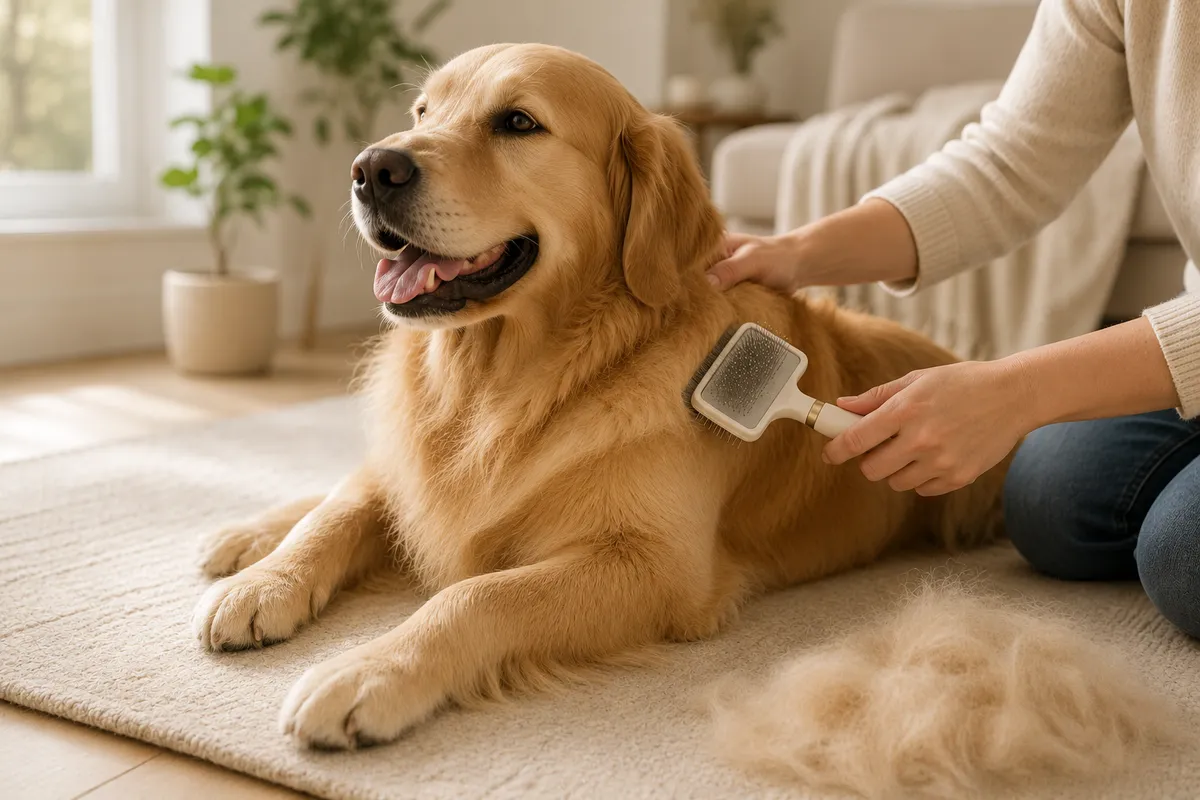
How to Brush a Dog the Right Way (Step-by-Step)
A calm, step-by-step ritual for brushing any coat type — how to do it well, how often, and what a healthy coat looks like.
 Dog Grooming
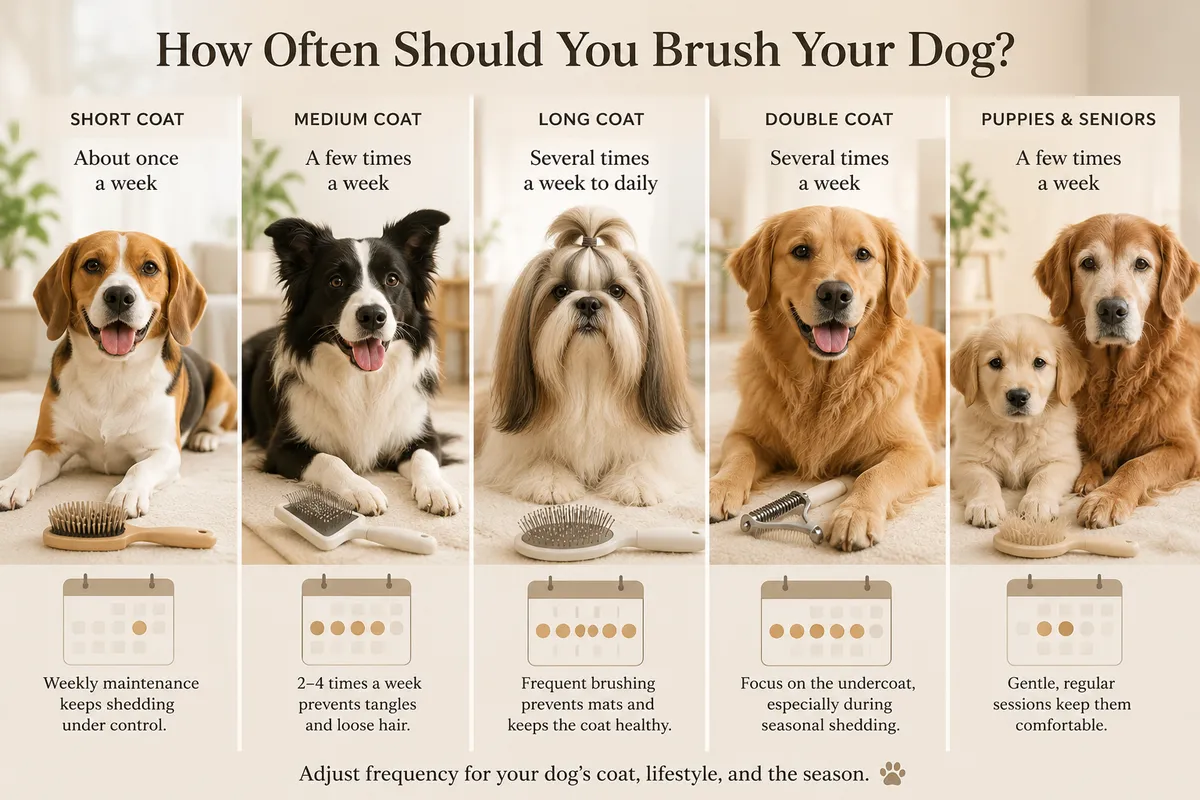
How Often Should You Brush Your Dog?
How often to brush your dog, by coat type — plus what changes the schedule and how to build a routine that actually sticks.
 Dog Grooming
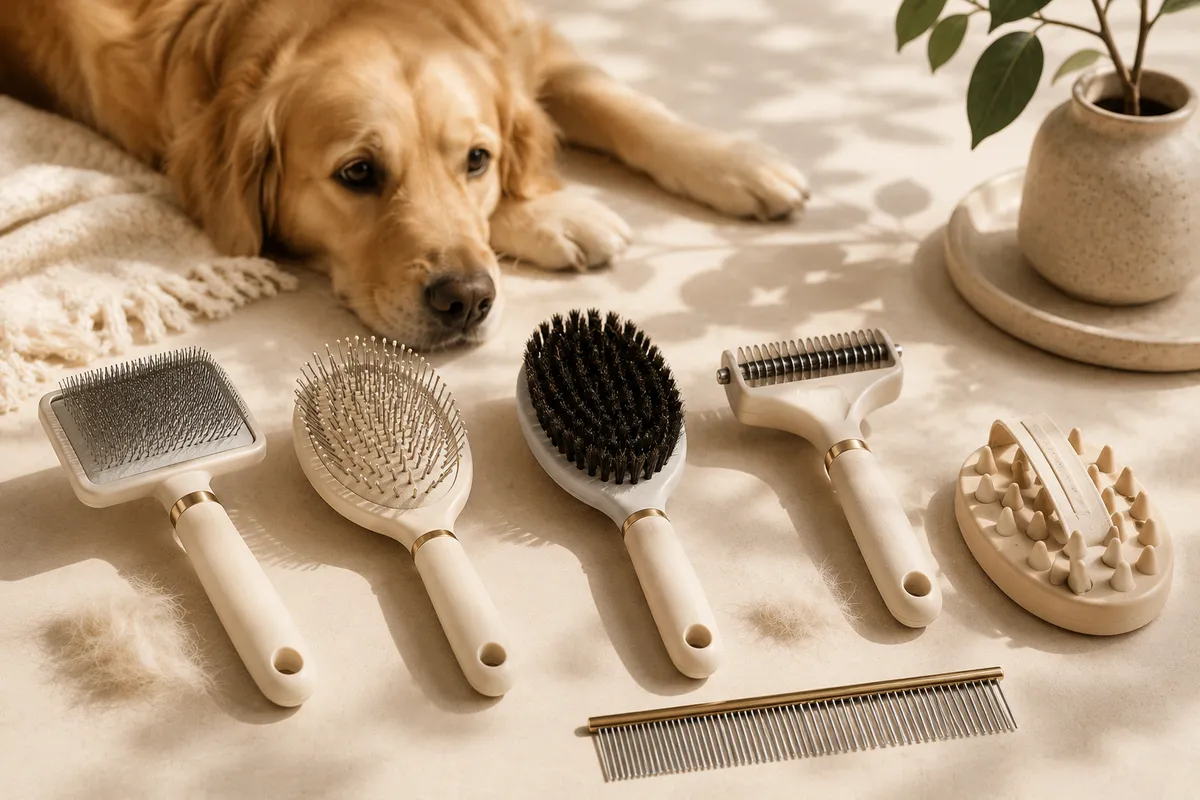
How to Choose the Right Grooming Brush
A plain guide to grooming brushes — what each type does, which suits your pet's coat, and how to match the tool to the job.