How to Reduce Cat Shedding at Home
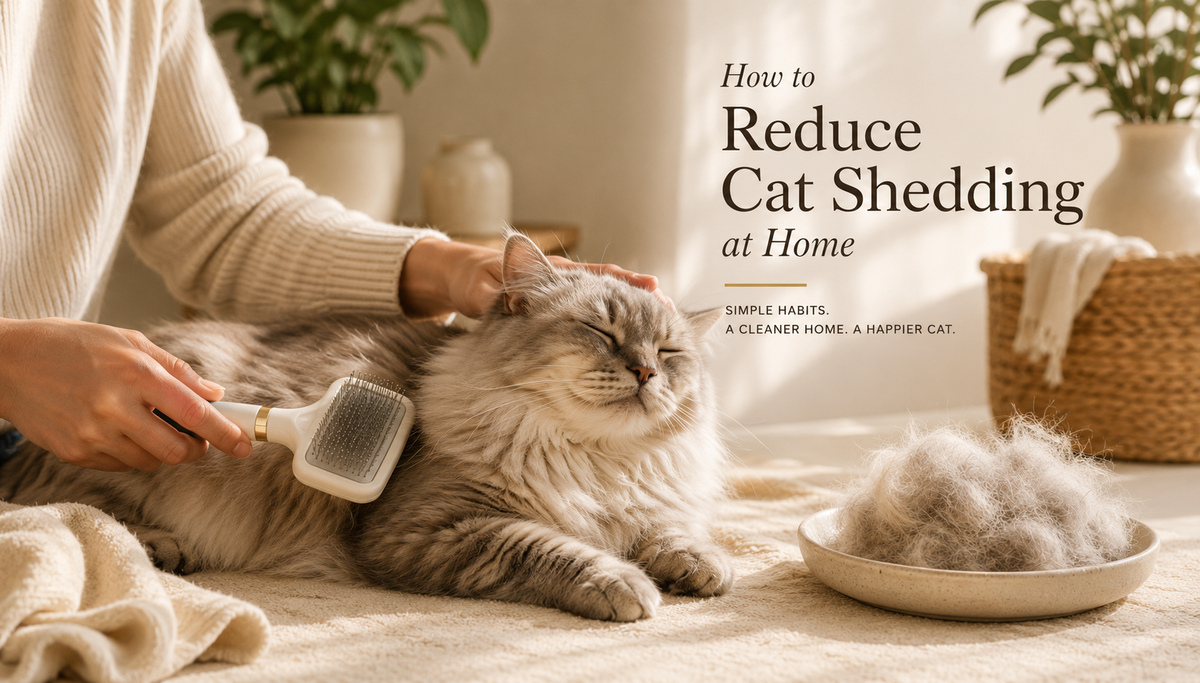
If your dark clothes have a permanent dusting of cat hair and your sofa cushions look like they're growing their own coat, you are not doing anything wrong — and your cat isn't either. Shedding is one of the most normal things a cat does. The fur you find around your home is the coat renewing itself, exactly as it's meant to.
What you can change is where that loose fur ends up. With a calm, consistent routine, most of it can come away in a brush instead of settling into your rugs and clothes. This guide covers what actually helps at home, the habits that make the biggest difference, and the moments when shedding is telling you something that deserves a veterinarian's attention rather than a new grooming tool.
You can't stop shedding — and that's the right starting point
Here's the honest truth that saves a lot of frustration: a healthy cat will shed, and no brush, food, or routine will switch that off. Hair grows, reaches the end of its cycle, releases, and is replaced. That cycle is the coat doing its job.
Indoor cats often seem to shed all year. Outdoor light and temperature normally cue a cat's coat to thin in warm months and thicken in cold ones, but central heating and electric light keep an indoor cat's world fairly constant, which can blur those seasonal swings into steady, low-level shedding instead.
So the realistic goal isn't less hair — it's loose hair captured on your terms. Once you reframe it that way, the routine below stops feeling like a fight against your cat's biology and starts feeling like simple maintenance.
Brushing is the one habit that changes everything
If you do nothing else, brush your cat regularly. It is by far the most effective home step for managing shedding, because every hair you lift into the brush is a hair that never makes it to your couch.
Regular brushing does three useful things at once. It removes loose and dead hair before it sheds onto your home. It helps spread the coat's natural oils from root to tip, which keeps the fur looking healthy. And for most cats, once they're comfortable with it, it becomes a calm point of contact in the day rather than a chore.
The technique matters as much as the frequency. Brush in the direction the fur grows, use a light hand, and follow the contours of your cat's body rather than pressing down. If you're starting from scratch — or with a cat who isn't sure about the whole idea — our full walkthrough on how to brush a cat covers the calm, step-by-step approach in detail.
How often to brush, by coat type
There's no single right number, but coat length is a good guide:
- Short-haired cats often do well with a brief session two to three times a week. Their coats trap less loose fur, so a quick pass is usually enough to stay ahead of it.
- Long-haired cats — think Maine Coons, Persians, and similar coats — usually benefit from a short brush most days. Their fur holds more loose hair and tangles more easily, so daily attention prevents both shedding and mats from building up.
In both cases, short and consistent beats long and occasional. A calm two or three minutes that your cat tolerates well is worth far more than a fifteen-minute session that ends with a stressed cat and a scratched hand.
The right tool makes the routine easier to keep
A brush that suits your cat's coat — and that your cat actually tolerates — is one you'll reach for consistently, and consistency is the whole game. The wrong tool, or one that's uncomfortable against the skin, turns brushing into something both of you avoid.
Look for a brush designed to lift loose undercoat gently, with rounded pin tips that move through fur without dragging on the skin. The PASLUNA™ brush is designed for exactly this kind of everyday, low-drama grooming across coat types. If you're weighing up options, our guide on how to choose a grooming brush walks through what to match to your pet's coat and why.
Support the coat from the inside, carefully
You'll find no shortage of supplements and "anti-shedding" foods marketed at cat owners. Approach them with a healthy skepticism. A cat's coat does reflect its overall health and nutrition — a dull, brittle, or unusually heavy-shedding coat can be a clue that something is off — but the right response isn't to add a product on a hunch.
The better move is a conversation with your veterinarian about whether your cat's current diet genuinely meets its needs. They can look at your specific cat, rule out underlying causes, and advise on nutrition far more reliably than a label promising a glossier coat. Fresh water always available and a diet suited to your cat's life stage are sensible foundations; anything beyond that is worth a professional opinion rather than guesswork.
Manage your home, not just your cat
Even with a solid brushing habit, some fur will always escape. A few small environmental habits keep it from taking over:
- Give loose fur a landing zone. A washable throw on your cat's favourite sleeping spot catches a surprising amount of hair and goes straight in the laundry.
- Brush in a cleanable space when you can. A quick session on a hard floor or a draped surface means the fur you remove is easy to sweep up rather than ground into upholstery.
- Stay ahead of it. Light, frequent cleaning of the places your cat loves beats occasional deep cleans, in the same way that frequent brushing beats occasional sessions.
None of this reduces shedding at the source — it just keeps the fur that does escape from accumulating.
Common mistakes that make shedding feel worse
A few well-meant habits tend to backfire:
- Brushing too hard or too long. Pressing down or over-brushing can irritate the skin and make your cat dread the routine. Light and brief is the rule.
- Only brushing when the shedding looks bad. By then you're cleaning up rather than getting ahead. A steady rhythm is what keeps loose fur under control.
- Bathing to "wash away" shedding. Most cats neither need nor want baths, and frequent washing can dry the skin and worsen coat problems.
- Reaching for a supplement before ruling out a cause. If shedding has genuinely changed, that's a reason to investigate with a vet — not to layer on products.
When to pause and contact your veterinarian
Most shedding is routine. But your cat's coat is also one of the clearest windows into its health, so certain changes are worth a professional's eyes rather than a change in routine. Contact your veterinarian if you notice:
- Bald patches, thinning areas, or broken hairs, rather than evenly distributed loose fur.
- A sudden, marked increase in shedding that's clearly different from your cat's normal pattern.
- Red, flaky, scabbed, or irritated skin under the coat.
- Excessive scratching, licking, or over-grooming — especially a cat grooming one area until it's bare, which can signal discomfort, allergies, parasites, or stress.
- A dull, greasy, or unhealthy-looking coat alongside changes in appetite, energy, or behaviour.
These signs don't always mean something serious, but they're outside what brushing can fix, and a vet can identify the cause far sooner than trial and error at home. When in doubt, a quick call is always the right call.
Build the habit and the hair takes care of itself
Reducing cat shedding at home isn't about finding a miracle product — it's about a calm, repeatable routine. Brush regularly and gently, match the rhythm to your cat's coat, use a tool you'll actually reach for, give loose fur somewhere to land, and stay alert to the changes that warrant a vet's input.
Do that consistently, and the fur on your clothes and furniture becomes a manageable background detail rather than a daily battle. The cat stays comfortable, the coat stays healthy, and the grooming itself can become one of the quieter, more pleasant few minutes of your day. If your cat resists being brushed at all, that's worth solving gently rather than forcing — our guide on how to brush a cat that hates it is the natural next step.
Key takeaways
- You can't stop a healthy cat from shedding — it's a normal part of how the coat renews itself. The goal is to capture loose fur before it lands on your home.
- Regular brushing is the single most effective thing you can do at home. It removes loose hair on your terms instead of your sofa's.
- Match the brushing rhythm to the coat: short-haired cats often do well with a quick session a few times a week; long-haired cats usually benefit from a little every day.
- A sudden change in how much your cat sheds — especially with bald patches, redness, or over-grooming — is a reason to call your veterinarian, not to buy a different brush.
Frequently asked
The PASLUNA Editorial Team creates expert-backed educational content focused on pet grooming, coat care, shedding management, and pet wellness for dogs and cats.
 Cat Grooming
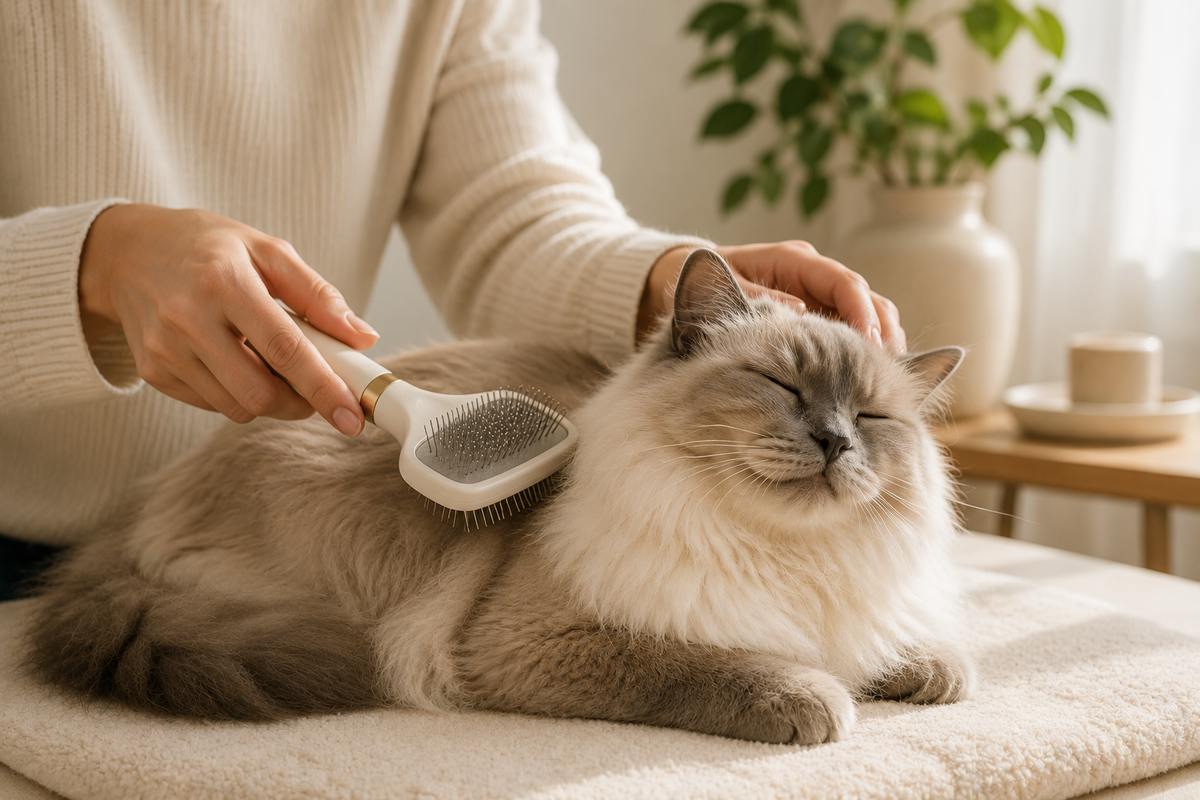
How to Brush a Cat Without Stress
How to brush a cat calmly — reading her signals, choosing the right moment, and short gentle sessions that work even for cats who hate it.
 Cat Grooming
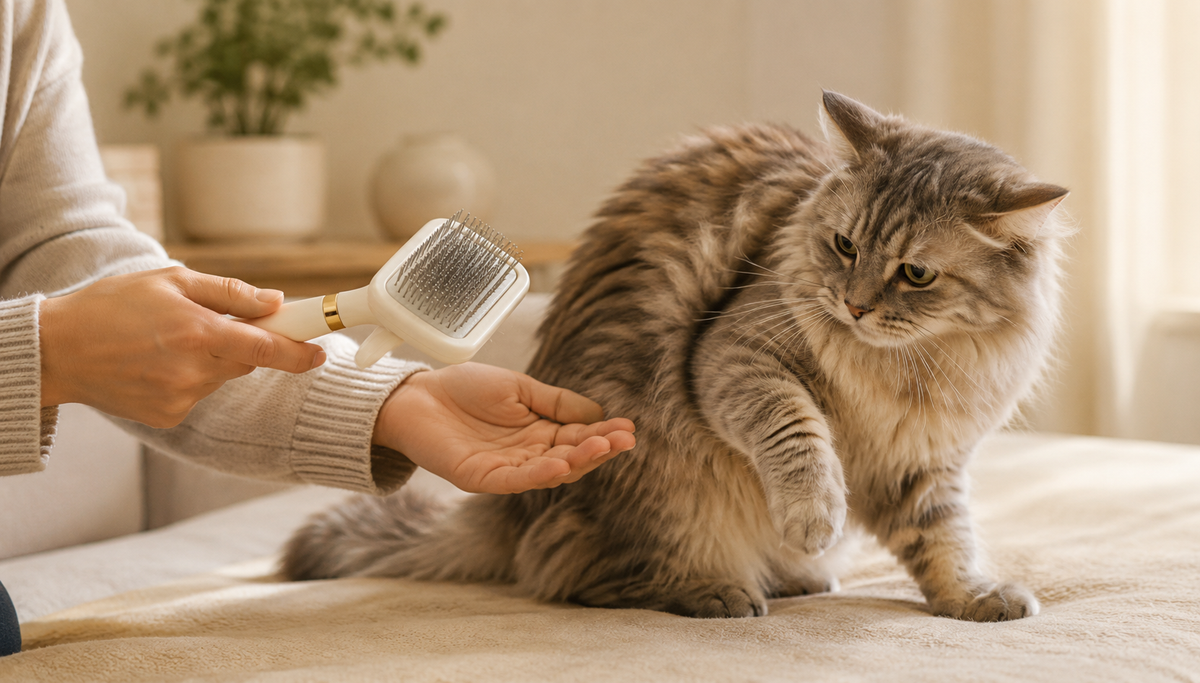
How to Brush a Cat That Hates It
A patient, low-stress method for cats who fight the brush — reading the warning signs, building tolerance over days, and knowing when resistance means pain.
 Dog Grooming
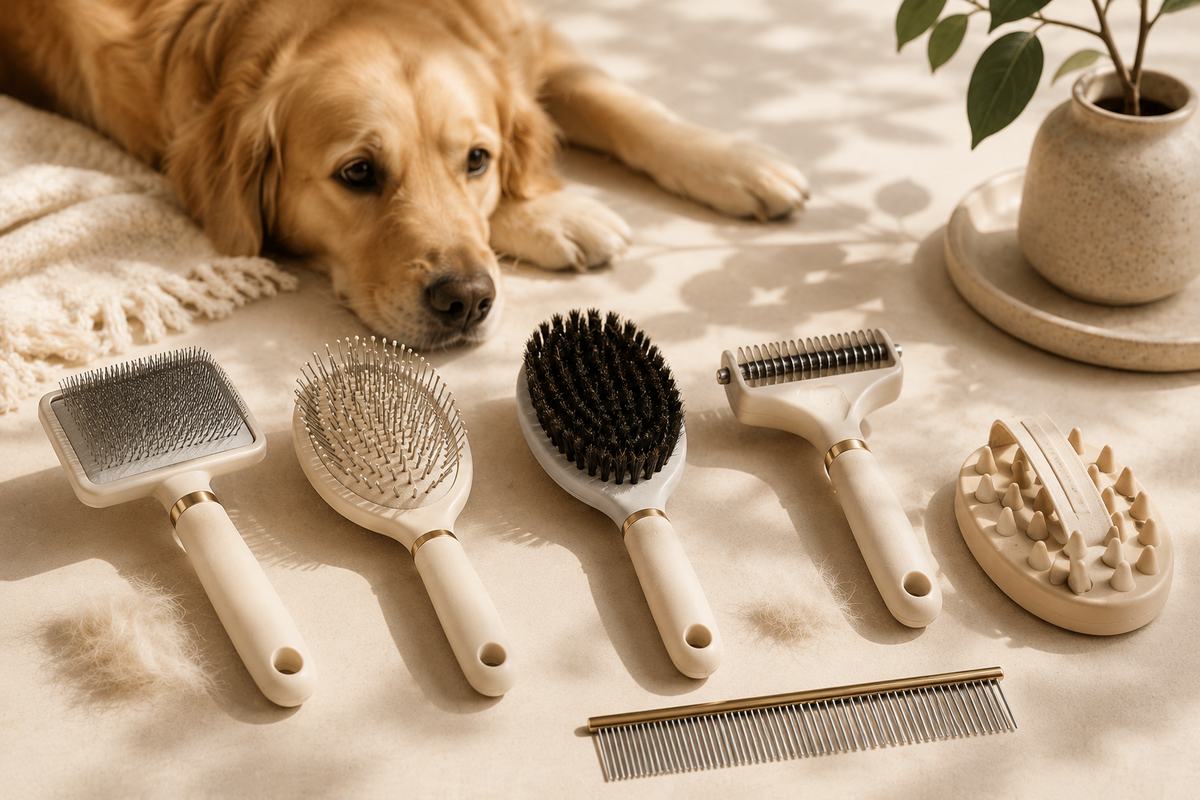
How to Choose the Right Grooming Brush
A plain guide to grooming brushes — what each type does, which suits your pet's coat, and how to match the tool to the job.
 Shedding
Why Does My Dog Shed So Much?
Why dogs shed, what counts as normal versus excessive, and how to tell ordinary seasonal shedding from a sign worth a vet visit.