How to Brush a Cat That Hates It
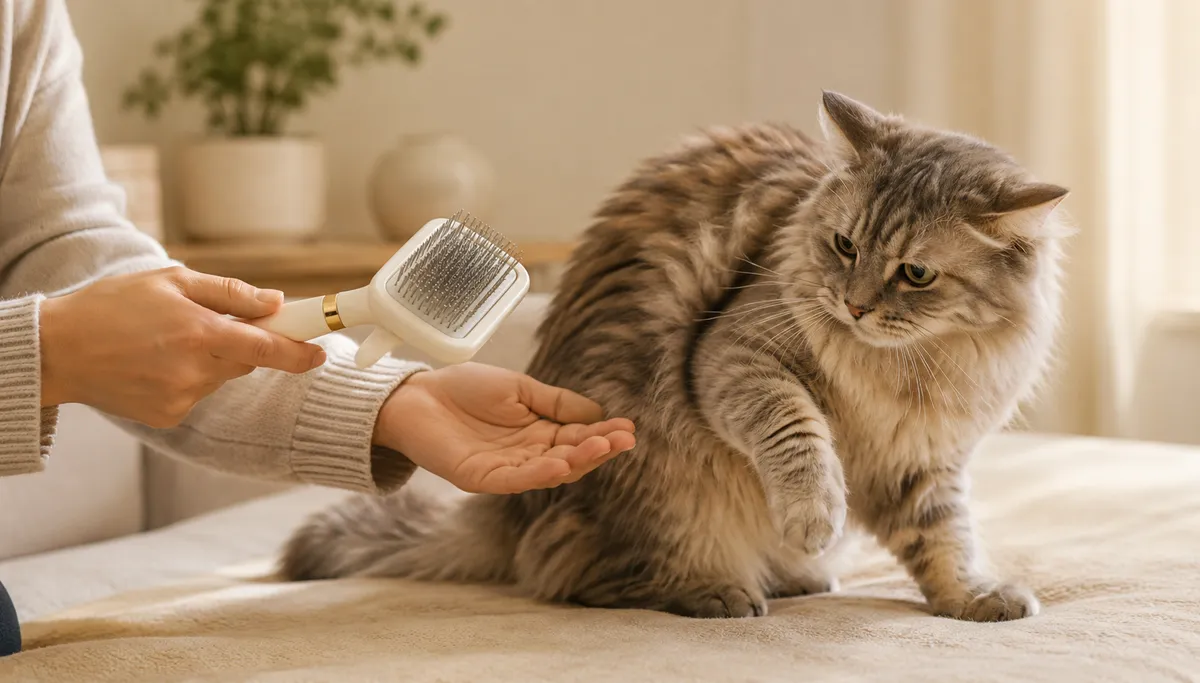
If brushing your cat ends in a flicking tail, a warning swat, or a fast exit under the bed, you already know the standard advice — "just brush a few times a week" — doesn't account for a cat who genuinely hates it. Forcing the issue makes it worse. Giving up entirely leaves you with tangles, loose fur everywhere, and a coat that needs the attention your cat won't allow.
There's a third path, and it's the one that works: go slower than feels necessary, learn to read what your cat is telling you, and rebuild her relationship with the brush one small, calm step at a time. This guide is specifically for the resistant, anxious, or reactive cat — not the cat who merely tolerates a quick groom. If yours falls into the second group, our general guide on how to brush a cat is the better starting point.
A cat that hates the brush is telling you something
The most important shift is to stop reading resistance as stubbornness. A cat who fights the brush almost always feels unsafe, overwhelmed, or physically uncomfortable. She isn't being difficult — she's communicating in the only way she has.
The reasons are usually understandable. The sensation of brushing may simply feel strange to a cat who wasn't introduced to it gently when young. A past session may have hurt — a tug on a tangle, a brush that dragged on the skin — and she now expects that again. You might be touching a sensitive area, like the belly or near the tail. Or there may be a physical cause underneath the fur that brushing aggravates.
Once you treat her reaction as information rather than misbehaviour, the whole approach changes. You're no longer trying to get through a session — you're trying to make the brush feel safe. That's a slower goal, but it's the only one that lasts.
Learn the warning signs and stop before the swat
Cats give clear signals before they escalate to a swat or a bite. The trouble is that these signals are easy to miss until you know to look for them. Learning to read them is the single most useful skill for grooming a reactive cat, because it lets you stop before a session turns into a bad memory.
Watch for the early signs of "I've had enough":
- A tail that starts twitching, flicking, or lashing. This is often the first and clearest tell.
- Ears that flatten or rotate back.
- Skin that ripples or twitches along the back.
- A body that stiffens, or a sudden still, crouched posture.
- Turning the head sharply toward the brush or your hand.
- A low growl, a hiss, or dilated pupils.
The moment you see the early signs, stop calmly and end the session. Don't wait for the swat. Every time you stop before she escalates, you're teaching her that the brush is predictable and that she has some control — which is exactly what a fearful cat needs to believe.
Build tolerance in tiny steps
The method that works is gradual desensitization: slowly changing how your cat feels about the brush, rather than forcing her to endure it. It takes days or weeks, not minutes, and it's worth every bit of the patience.
Step 1 — Let her investigate the brush
Before you brush anything, simply let the brush exist near her. Set it down where she rests. Let her sniff it, rub against it, ignore it. You want her to learn that the brush appears and nothing bad happens. Spend a few days here if she's very wary.
Step 2 — Pair the brush with calm
Bring the brush out during her relaxed, content moments — when she's settled and at ease, not keyed up. The goal is to associate the sight of the brush with feeling safe. Keep your own energy quiet; cats read tension easily.
Step 3 — One stroke, then stop
When she's comfortable with the brush nearby, try a single gentle stroke along an area most cats accept — the cheeks, under the chin, along the upper back. Then stop immediately, while she's still calm. One good stroke that ends on a positive note is a genuine win. Resist the urge to "just do a bit more."
Step 4 — Extend slowly
Over following sessions, add a second stroke, then a third, always stopping before she shows she's had enough. Stay on the areas she accepts and leave the sensitive zones — belly, legs, tail base — until much later, if at all. Let her walk away whenever she wants; a cat who knows she can leave is far less likely to feel she has to fight.
This is slow on purpose. A calm thirty seconds today that ends well is worth more than a five-minute struggle that sets you back a week.
Remove the physical reasons to resist
Sometimes a cat resists for a concrete, fixable reason — and solving it removes the resistance.
The brush itself may be the problem. A tool that drags on the skin or pulls at the fur gives your cat every reason to dislike grooming. A brush designed to move gently through the coat, with rounded pin tips that don't catch on the skin, takes away one of the most common triggers. The PASLUNA™ brush is designed for this kind of comfortable, low-resistance grooming. If you're not sure what suits your cat, our guide on how to choose a grooming brush explains how to match the tool to the coat.
Tangles and mats hurt. For long-haired cats especially, a cat may resist because brushing tugs on a mat and pulls the skin. Never try to cut a mat out with scissors — the skin underneath is easy to nick. If you can't gently ease it apart, a groomer or veterinarian can remove it safely, which often relieves the very discomfort that was driving the resistance.
Common mistakes that make a fearful cat worse
When grooming feels like a fight, it's tempting to reach for these — and each one backfires:
- Restraining or pinning her. This teaches the cat that the brush means being trapped, and deepens the fear every time.
- Pushing for a "complete" session. Insisting on brushing the whole cat in one go almost guarantees you'll pass the point where she's calm.
- Brushing the sensitive areas too soon. The belly, legs, and tail base are high-stakes zones; earning trust on easier areas first is essential.
- Punishing or scolding. A cat can't connect a scolding to grooming in a useful way — it only adds fear to an already fraught moment.
- Trying again immediately after a bad session. Give it real time. Pushing straight back in confirms her worst expectations.
When to pause and contact your veterinarian
Resistance is usually behavioural, and patience resolves most of it. But sometimes a cat fights the brush because something hurts — and that deserves a professional, not persistence. Contact your veterinarian if you notice:
- A sudden change in a cat who previously tolerated brushing. New resistance is one of the ways cats show pain.
- A strong reaction when a specific area is touched — flinching, crying out, growling, or trying hard to get away when one spot is groomed — which can point to injury, arthritis, or a skin problem.
- Signs of pain or illness alongside the resistance: limping, reluctance to move, changes in appetite or litter-box habits, or hiding more than usual.
- Skin problems revealed while grooming — redness, scabs, sores, parasites, or matting that's pulling on the skin.
- Aggression that seems out of character or is escalating despite a calm, gradual approach.
A cat that hates being brushed may also be carrying stress that shows up in other parts of her life. If anxiety seems to be part of the picture, our guide on how grooming reduces pet anxiety looks at how a calm routine can help — though persistent or sudden behaviour changes are always worth a vet's input first.
Patience is the whole technique
There's no shortcut with a cat that hates the brush, and that's genuinely fine. The work is to go slow enough that she never has to defend herself: read her signals, stop early, build trust in tiny increments, and remove the physical reasons she might have to resist.
Done this way, many cats who once fled the brush come to tolerate and even lean into a gentle session. It won't happen in a day, and some cats will only ever accept a brief groom on their own terms — which is a perfectly good outcome. The measure of success isn't a perfectly brushed cat in one sitting. It's a cat who no longer believes the brush is something to fear. Once you're there, keeping loose fur under control gets much easier — our guide on how to reduce cat shedding covers the steady routine that follows.
Key Takeaways
- A cat that hates brushing is almost always saying she feels unsafe, overwhelmed, or uncomfortable — not being difficult. The fix is patience, not pressure.
- Learn to read the early warning signs (a flicking tail, flattened ears, a tense body) and stop before your cat escalates to a swat or a bite.
- Build tolerance in tiny steps over days or weeks: let her investigate the brush, pair it with calm and good associations, and use the 'one stroke, then stop' method.
- Sudden resistance in a cat who used to tolerate brushing can mean pain. If grooming a particular spot causes a strong reaction, contact your veterinarian before continuing.
Frequently asked

The PASLUNA Editorial Team creates expert-backed educational content focused on pet grooming, coat care, shedding management, and pet wellness for dogs and cats.
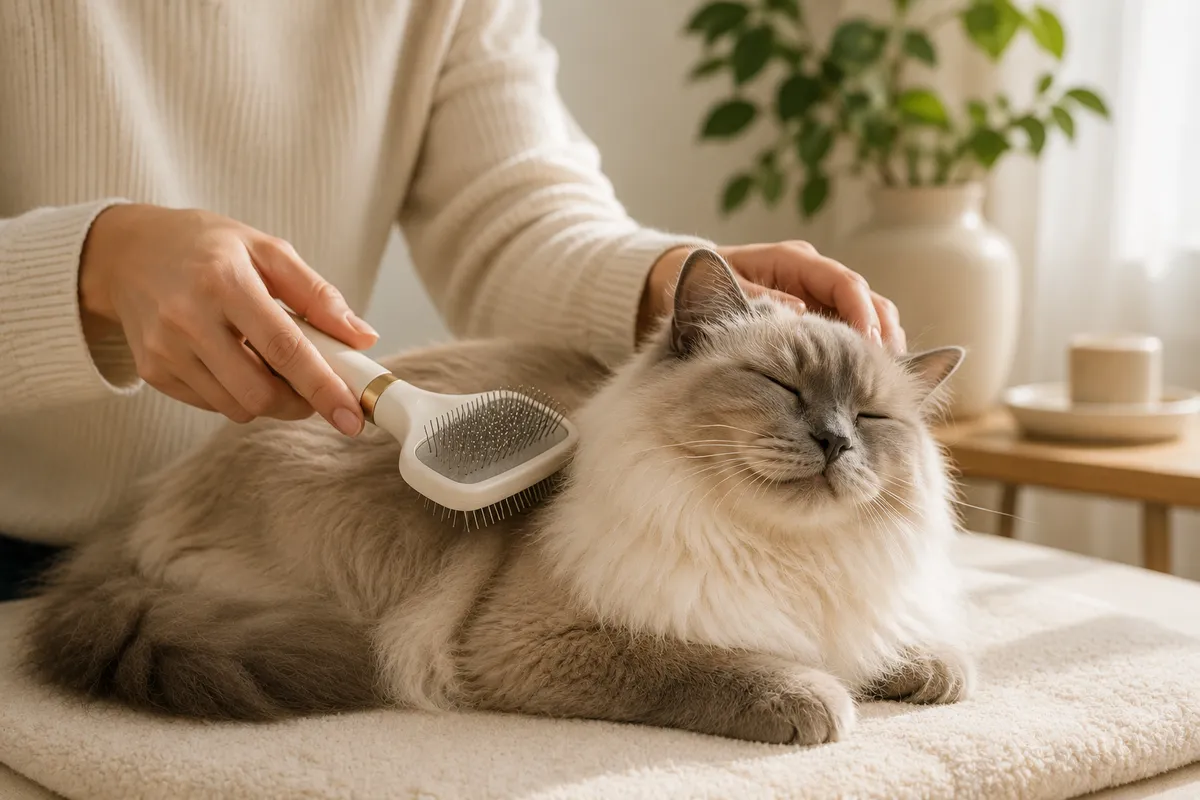 Cat Grooming
How to Brush a Cat Without Stress
How to brush a cat calmly — reading her signals, choosing the right moment, and short gentle sessions that work even for cats who hate it.
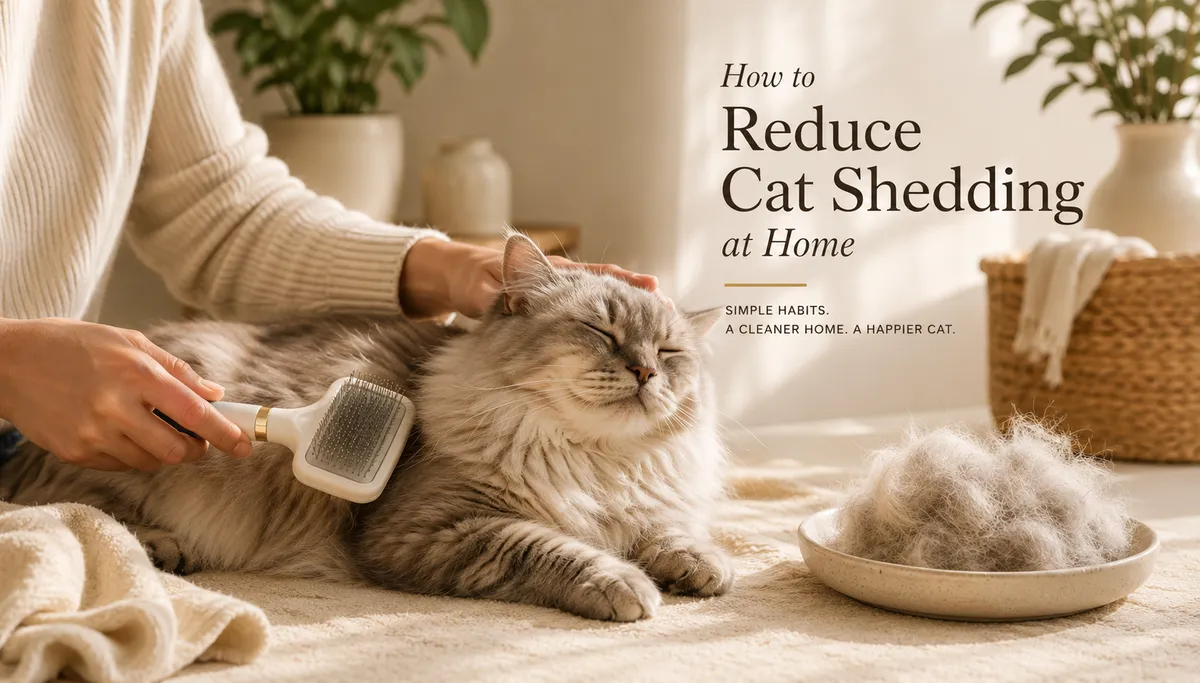 Cat Grooming
How to Reduce Cat Shedding at Home
A calm, practical routine for managing cat shedding — what actually helps, what doesn't, and when loose fur is worth a vet's attention.
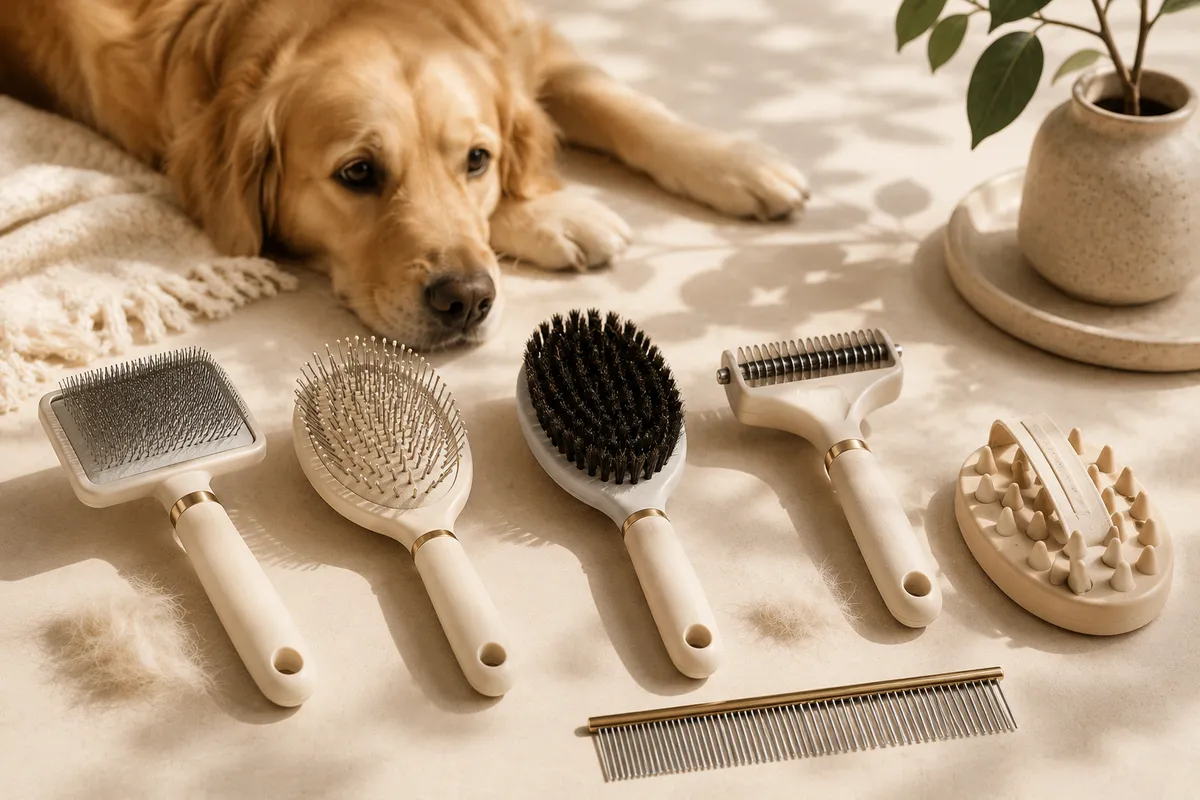 Dog Grooming
How to Choose the Right Grooming Brush
A plain guide to grooming brushes — what each type does, which suits your pet's coat, and how to match the tool to the job.